[Timber]
Jarrah vs Marri: Which WA Hardwood for Heirloom Furniture?
Forty years of working with both. Here's what each one does, how it ages, and how I decide which way to cut for a given piece.
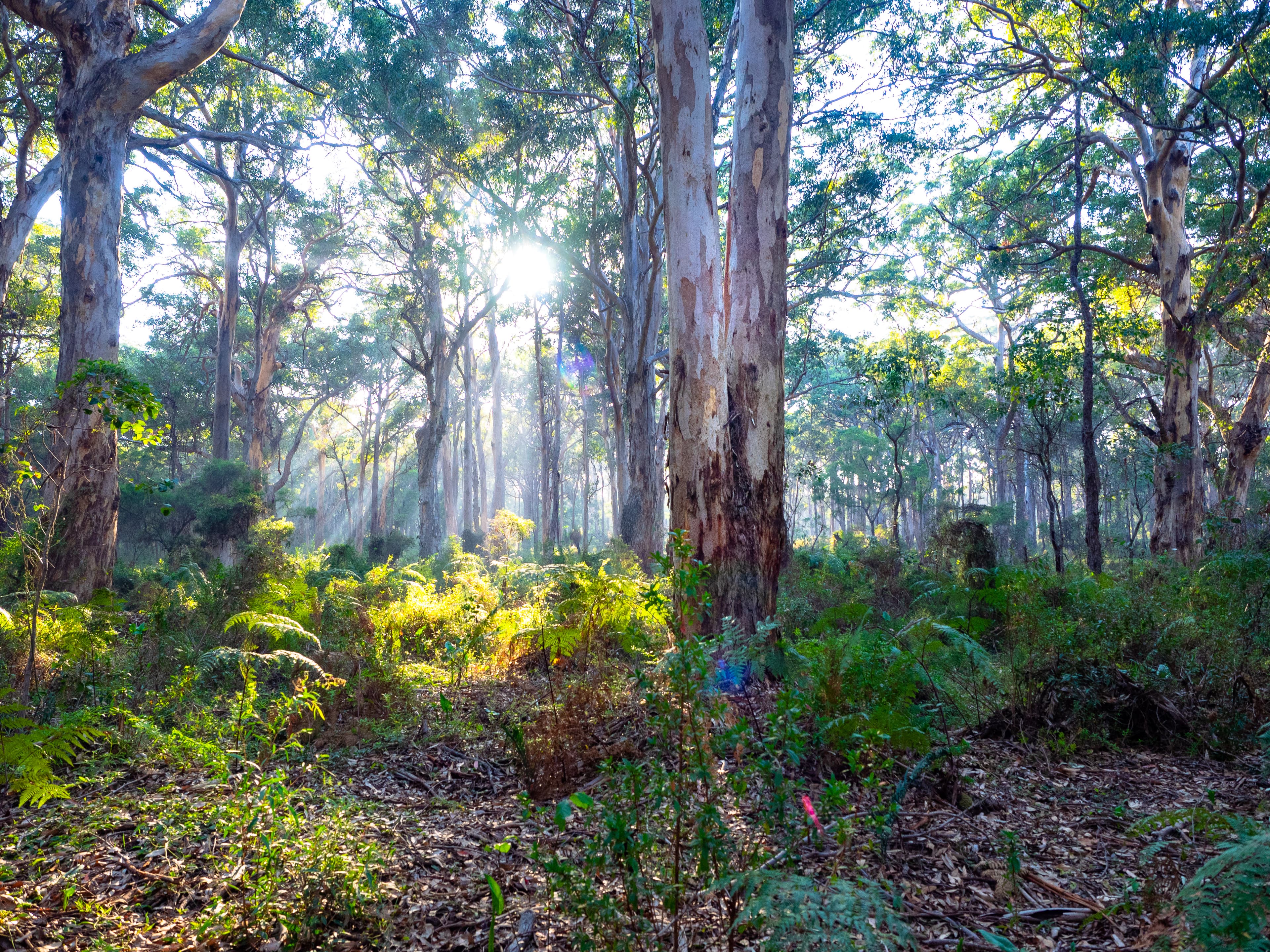
People ask me this more than any other question. Jarrah or marri. My honest answer is: it depends what you want the piece to do in fifty years.
I get the question every week. Sometimes from clients planning a commission, sometimes from people who've just walked into the gallery and put their hand on a table and asked what it is. The answer matters because the wrong wood for the wrong piece is the kind of mistake you only really notice once. So I want to take this slowly.
How I think about the question
Before I tell you about either of them, here's the framework I use.
Every timber has three things going for it: how it looks now, how it works under the tools, and how it ages. Most people only think about the first one. A good furniture maker thinks about all three, and weighs them against the piece you're trying to make.
A dining table sees daily wear, hot plates, wine spills, kids' homework. It needs hardness. A sideboard against a wall in a hallway needs presence more than toughness. A bedhead doesn't get touched at all once it's installed. It just has to look right in the morning light. So when somebody asks me jarrah or marri, what I'm really asking back, in my head, is: what's this piece going to live through?
Both timbers are local. Both come from this corner of the South West. Both will outlast you when treated properly. But they're not interchangeable.
Jarrah
Jarrah is Eucalyptus marginata. It only grows here, in a band running south from Perth down through the South West and inland to the wheatbelt edge. Nowhere else on earth. That's not me being romantic about it, it's just geographically true.
The wood is dense. Around 800 to 900 kilograms per cubic metre when seasoned, which puts it in the upper range of cabinet hardwoods. It's heavy to lift. It's hard on tools: you sharpen more often, you go through more sandpaper, and machinery has to be set up properly or jarrah will tell you off. I have a pair of planes I only use for jarrah because the iron stays sharper without switching between species.
The colour is what most people fall for. Fresh-cut jarrah is a deep red-brown, sometimes almost pink in the lighter boards, sometimes a chocolate-brown with purple undertones in the heart. Old growth runs darker than regrowth. Recycled jarrah out of an old building or a wharf can be almost black on the surface from oxidation, then surprise you with a vivid red when you machine it back.
What makes jarrah do its work as furniture is the grain. It runs straight most of the time, occasionally interlocked or wavy. When you get a piece with what we call "fiddleback" or "ribbon" figure, the surface catches light in a way you don't expect. Run a finger across a well-finished jarrah top under a low lamp and the whole surface seems to move.
It ages by darkening. Over three or four decades, jarrah goes from that red-brown to something closer to a warm chestnut. The grain stays. The hardness stays. What changes is the depth of the colour. It goes inward, gets more settled. I have a jarrah hall table in my own house that I made in 1989, and the colour today is not the colour it was when I delivered it. It's better.
the way jarrah changes over decades
Old growth runs darker than regrowth. Recycled jarrah out of an old building can be almost black on the surface, then surprise you with a vivid red when you machine it back.
Marri
Marri is Corymbia calophylla. Same region, often growing alongside jarrah in mixed stands, but a different tree and a very different timber.
The wood is lighter in colour. Fresh-cut marri runs a creamy gold to a pale honey-brown, sometimes with pink streaks through the heart. It's slightly softer than jarrah, around 700 to 800 kilograms per cubic metre, but only slightly. You wouldn't call it a soft timber. It works beautifully under tools, takes a chisel cleanly, and finishes to a smooth surface with less effort than jarrah.
What gives marri its character is the gum veins. Resin pockets: dark seams of orange-brown gum that run through the timber where the tree healed an injury. Some makers fill them with a contrasting epoxy. Some leave them alone. I do both, depending on the piece. A live-edge marri slab with gum veins through it has a presence I haven't seen in any other Australian timber. It looks like geology, not joinery.
Marri moves a little more than jarrah while it's seasoning. You have to be patient with it. A green marri board needs eighteen months to two years of careful drying before I'll touch it for fine furniture, and even then I'll let it rest in the workshop for a few months before cutting. Rush it and it'll twist.
The good news: once it's settled, it stays settled. And the colour barely shifts as it ages. Marri made in 1990 still looks essentially the colour it did when it left the workshop, perhaps a touch warmer. Where jarrah deepens, marri holds steady.
When I choose each
Here's how I split them in my head.
I reach for jarrah when: the piece is going to take daily punishment (dining tables, kitchen pieces, anything with kids). When the client wants something dark, settled, weighty. When the design wants to disappear into the wood rather than the wood serving the design. Jarrah is its own statement and you build around it.
I reach for marri when: the piece is going to be looked at more than touched (sideboards, hall tables, display pieces, bedheads). When the design wants light to bounce off it rather than absorb into it. When a client wants Australian timber but doesn't want red, and there are plenty of clients in that category. When a slab has a feature that should be the whole point, a gum vein or a knot or a piece of figure that needs the lighter background to read properly.
There's no rule. Some of my best dining tables are marri. Some of my best display pieces are jarrah. But the framework is roughly that.
Sourcing: the part most buyers don't ask about
You should ask where the timber came from.
I work with two sources. The first is recycled: old jarrah pulled out of buildings being demolished, mostly in Perth and the wheatbelt. Wharf timbers, beams, floorboards. This is wood that was cut a hundred years ago when the old-growth forests were still standing, and it has a density and a colour you can't get from new timber. There's a finite supply of it, but while it lasts, it's the best timber I work with.
The second is sustainably sourced from the Western Australian timber industry: sawmills working within state forestry. Both jarrah and marri are managed crops at this point, with strict cutting limits and regrowth requirements. Marri in particular is in much better supply than jarrah, because for a long time marri was treated as a waste species. It's not. It's a good timber, and the fact that it's more abundant is a reason to use it more.
Avoid anyone who can't tell you where the wood came from. A maker who shrugs is one to walk out on.
What to look for when buying
A few things, in order:
Grain direction. Should run mostly with the length of the piece. Look at the end-grain. Annual rings should be close together for old-growth, a bit wider for regrowth.
Joinery, not screws. A heirloom-quality piece uses joinery: dovetails, mortise and tenon, dominoes, tongue-and-groove panels. Screws and pocket holes are fine for cheap furniture but they're not what you're paying for.
Finish. Should feel smooth but you should still be able to feel the grain. An over-finished surface looks plastic.
Weight. Pick the piece up where possible. Lighter than expected for the size? Ask why.
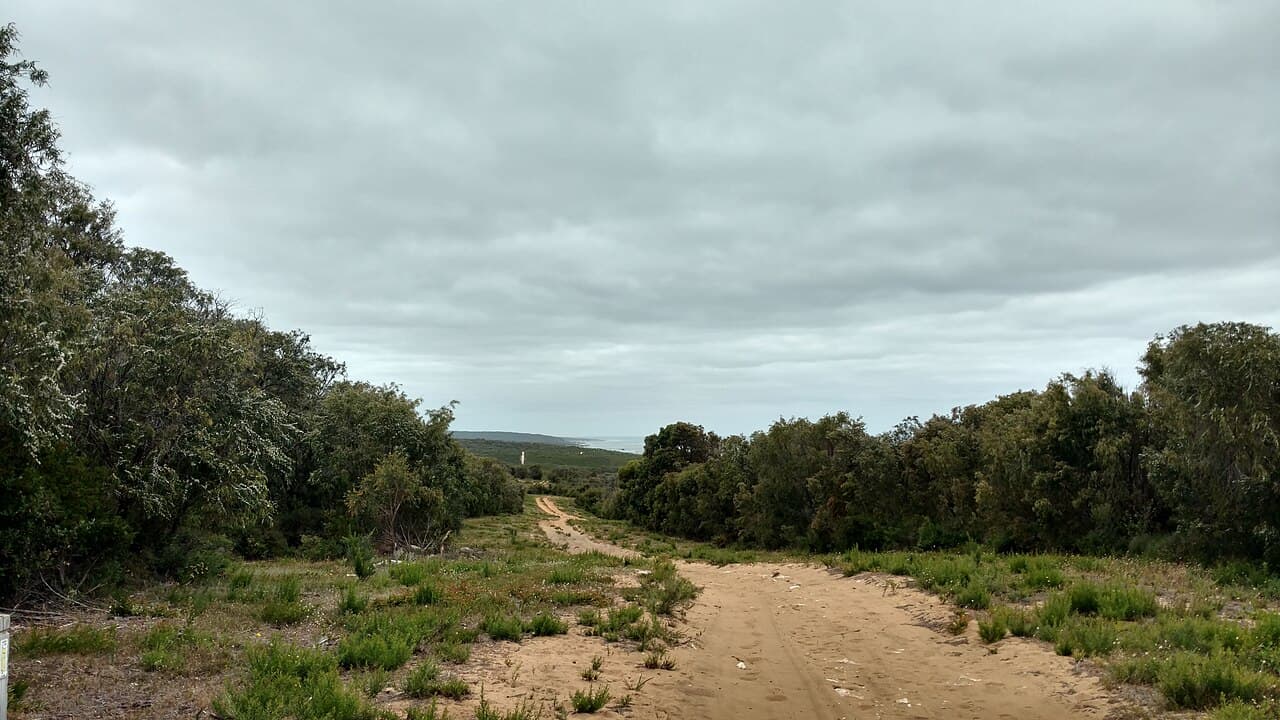
Photo: Lasthib, CC BY-SA 4.0 · via Wikimedia Commons
Walking the country the timber comes from
I do this on purpose. Choosing between two boards for a commission, I'll sometimes drive out and walk a section of the Cape to Cape, through the same mixed jarrah-marri forest that the timber came from, just to put my eye back on the trees.
You can't really separate the wood from the country. The grain holds the place. The light that comes through these trees in winter, low and cold, is the same light that ends up in a finished tabletop years later. People who buy furniture from us sometimes don't know that's why it looks the way it does. But it is.

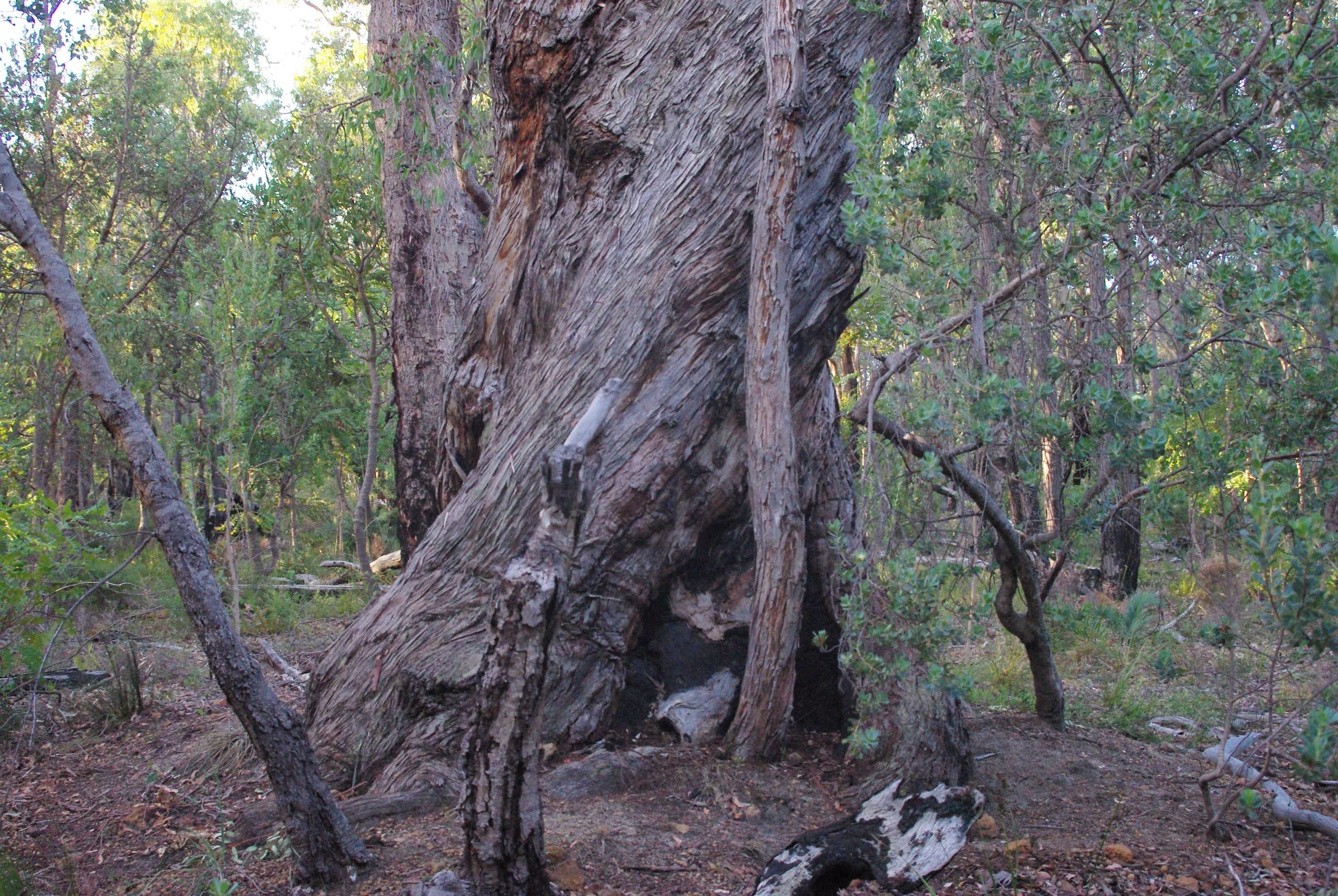
Photo: David Stanley, CC BY 2.0 · via Wikimedia Commons
a buyer's primer on local timbers
how a custom dining table gets commissioned
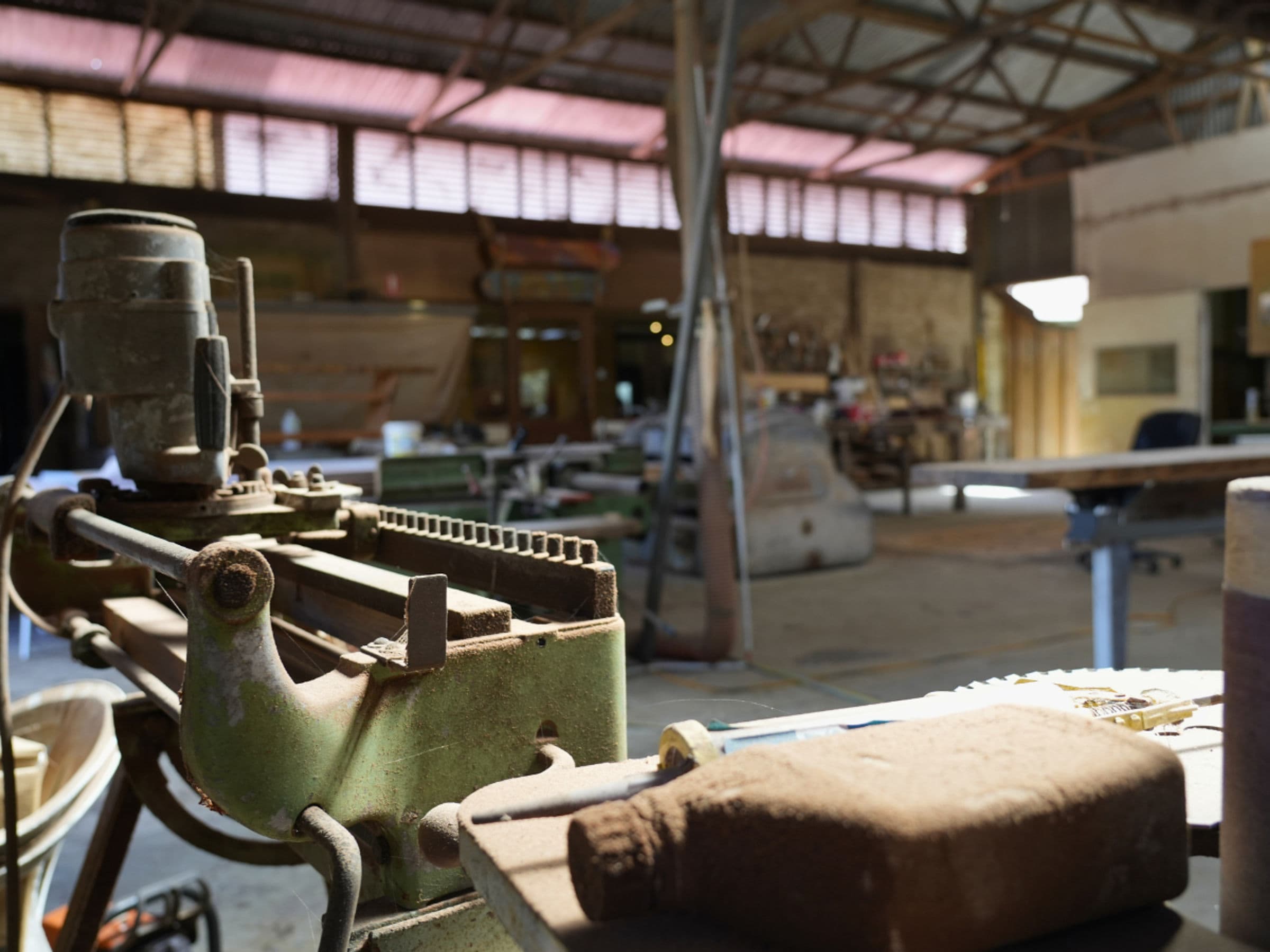
To compare them in person, the gallery has pieces in both. Come in and put your hands on them. Pam will meet you at the door. The workshop is just through the viewing window when I'm in there. Blythe Rd, Yallingup. Google Maps sometimes misdirects via Wildwood Rd; stay on Bussell Hwy, turn at the Carbunup store, then Blythe Rd.
The real answer to the jarrah-or-marri question is that you'll know when you put your hand on the right one. The wood tells you. Trust it.
Plan your visit to Yallingup.
Directions & hours →