[Timber]
How Solid Timber Furniture Ages: 30 Years of Jarrah, in Photographs
A jarrah piece I delivered in 1991 came back into view last year. The owners sent a photo. Here's what three decades does to the timber.
The piece I made in 1991 is still in a house in Cottesloe. The owners sent me a photo last year. The jarrah has darkened, the patina has deepened, and it looks better than when I delivered it.
That's the short version of this post. The long version is what jarrah actually does over thirty years, why, and what to expect if you've just commissioned a piece and you're wondering what it will look like in 2055.
The piece in question
It was a hall table. Three boards laid edge to edge for the top, dovetailed apron, four straight legs with a slight taper from the knee down. Nothing fancy. The clients were a young couple. They've raised three kids around it. The photo last year showed the table holding a vase, a stack of mail, and a set of car keys on a Wednesday morning. The same job it had on the day I delivered it.
In the 1991 photo I have on the workshop wall, the timber is bright. Reddish-brown with pink in the lighter boards, that fresh-cut jarrah colour that doesn't last. In the 2024 photo the timber is a deep chestnut. The grain is the same, straight and calm, but the colour has moved inward. It looks like a different table, except it isn't. It's the one I made.
That darkening is the headline. But there's more to it than colour.
What actually changes
Three things happen to jarrah over decades.
The colour darkens. Fresh jarrah is oxidising the moment it's cut. The reds turn to browns. The browns turn to chestnut. By twenty years in, most domestic-use pieces have moved through about two thirds of their total colour shift. By four decades in, the colour has more or less settled. A piece that's been in a sunlit room will darken faster than one in a hallway, but both will get there.
The grain becomes more visible, not less. This catches people out. They expect the timber to soften or blur with age. What actually happens is the opposite. As the surface gets a thin film of oils, waxes, hand-touch, and gentle wear, the grain pattern shows up more sharply. Run a finger over a thirty-year-old jarrah top under a low lamp. You'll see grain you didn't notice on day one.
The surface gets a patina. This is the word that does too much work in furniture talk. Patina is just the cumulative effect of life on the timber: the small marks, the soft wear on edges, the dulling of high points where hands rest most often, the slight darkening around pulls and handles. Patina is what separates a piece that has been lived with from a piece that has been preserved. Both are valid. But the lived-with piece is the one I'd rather make.
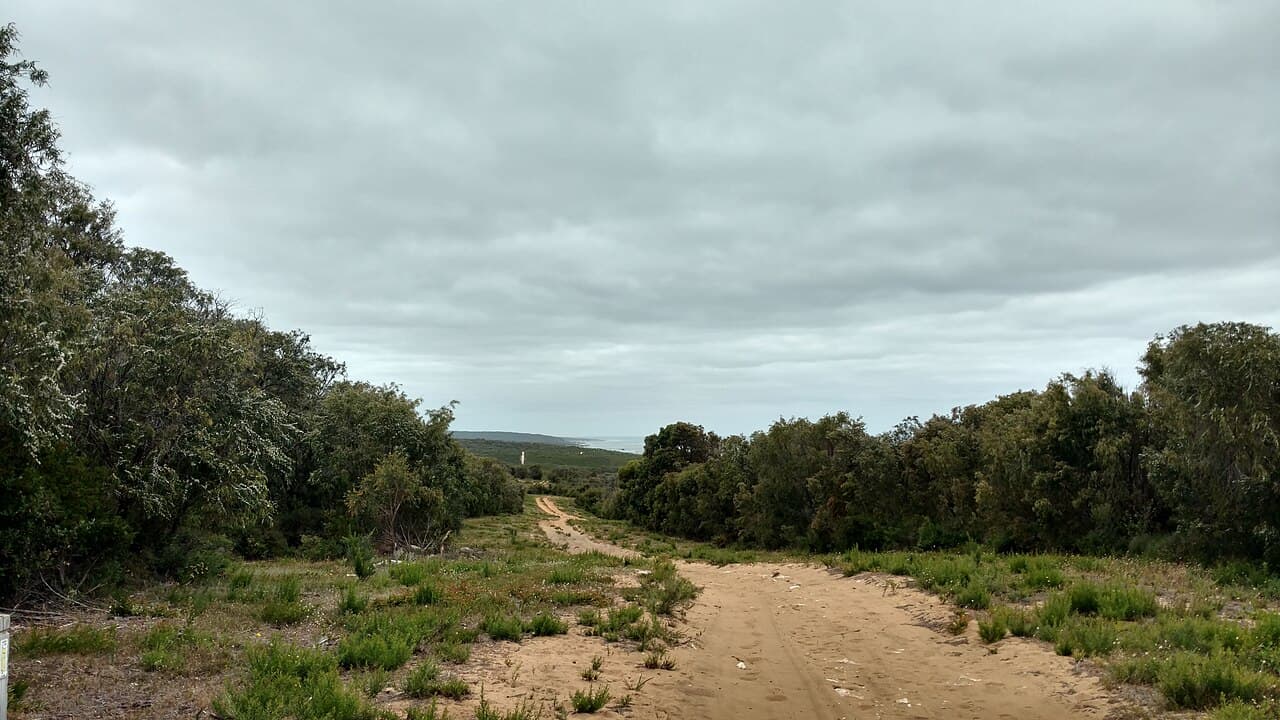
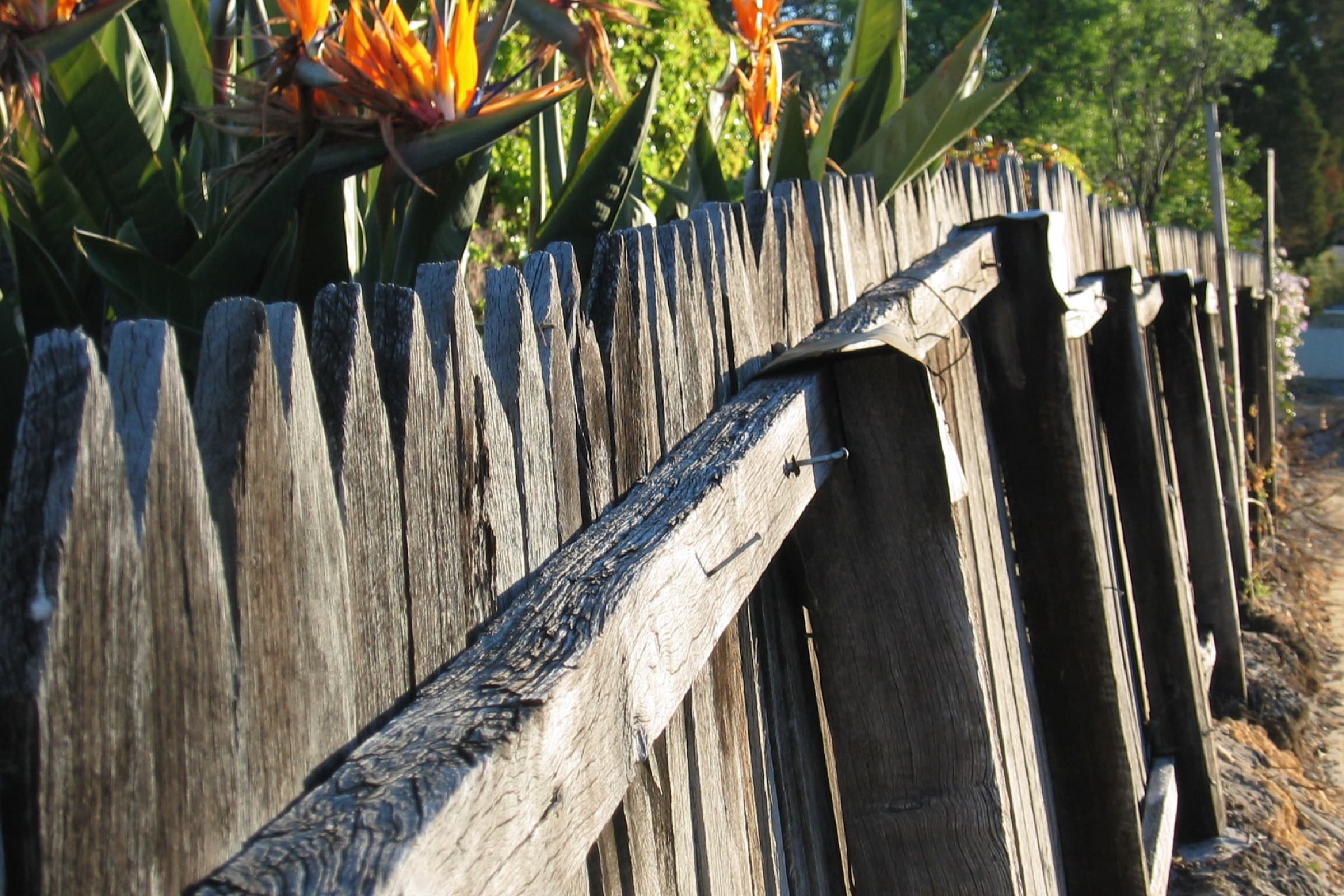
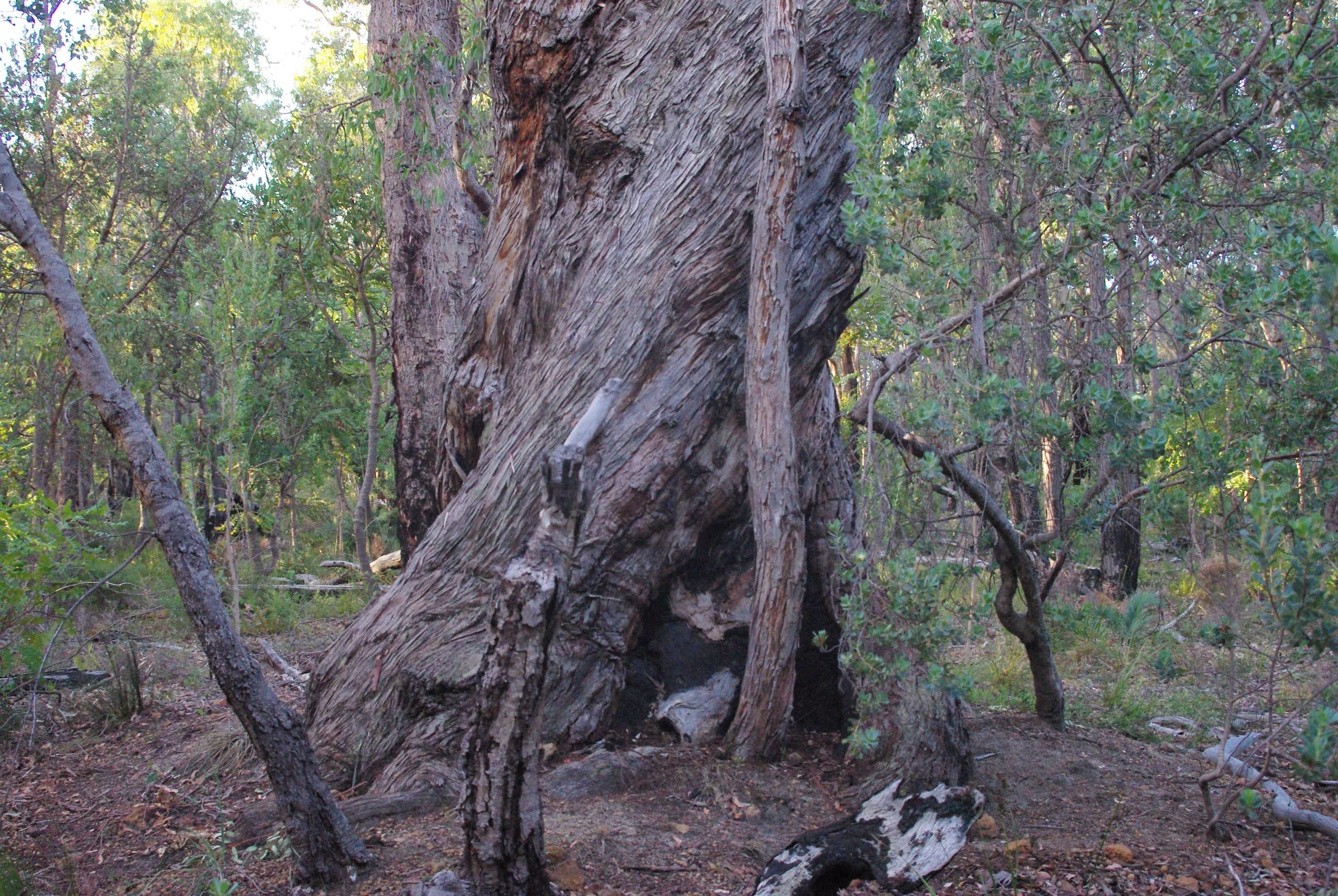
Photo: Lasthib, CC BY-SA 4.0 · via Wikimedia Commons
Why jarrah ages well
Jarrah is Eucalyptus marginata. Dense hardwood, around 820 to 900 kilograms per cubic metre dry, very high natural durability. The Forest Products Commission classes it among the most durable Australian hardwoods for in-ground use, which is well beyond what a dining table will ever face. Inside a house, the timber is basically static: moisture stays even, no UV in most places, no fungal pressure. The wood just sits and slowly oxidises.
The natural oils in jarrah are what give it the colour and the durability. As the surface oxidises, those oils migrate slightly upward, which is what creates the visible deepening. It's a slow chemistry. Nobody can speed it up and you wouldn't want to. The gradual move is the whole point how jarrah and marri actually differ.
A piece in direct sun fades for the first year or two, then darkens. A piece in low light darkens steadily. Either way, by year thirty you have a different colour from year zero. Both are jarrah. Both are correct.
Patina is what separates a piece that has been lived with from a piece that has been preserved. The lived-with piece is the one I'd rather make.
What the finish does
The way a piece is finished changes how it ages, but doesn't change whether it ages. Three options I use:
Oil finish. Hand-rubbed Danish oil or a similar penetrating oil. Lets the timber breathe. Develops patina fastest. Easy to repair. A scratch can be sanded and re-oiled in minutes. Most of my pieces are oiled.
Wax finish over oil. Adds a slightly warmer surface and a softer hand. Same ageing pattern but with a more visible surface gloss in the first few years. Settles back to similar to oil finish after a decade.
Lacquer or hard polyurethane. Holds the original colour for longer. The timber underneath still darkens but more slowly. This is what most commercial furniture uses. I rarely use lacquer on my own pieces because when it eventually fails (and it will, at thirty years or so) it has to be stripped and re-applied. With oil, you just oil it again.
The 1991 hall table was oil-finished. The owners have re-oiled it perhaps four times in thirty-three years. That's roughly once a decade. It's the easiest possible care regime looking after WA hardwoods at home.
The marks that mean something
The same Cottesloe table has marks on it. A ring from a hot cup, near the left end. A small ding on the corner where a kid's bike rode into it once. A pale patch on the apron where the dog used to lean against it on summer days.
I asked the owners if they wanted me to refinish it when I saw the photo. They said no. They like the marks. They told me what each one was. The marks are the family history written on the timber, and refinishing them out would be erasing the diary.
This is what I try to tell new clients. Jarrah will mark. It's hard but it's not invincible. You'll put a heavy bowl down too quickly and there'll be a dent. A wine glass will leave a ring if you leave it sitting. That's fine. Those marks are the piece becoming yours. A piece without any marks at twenty years has either been overprotected or unused.
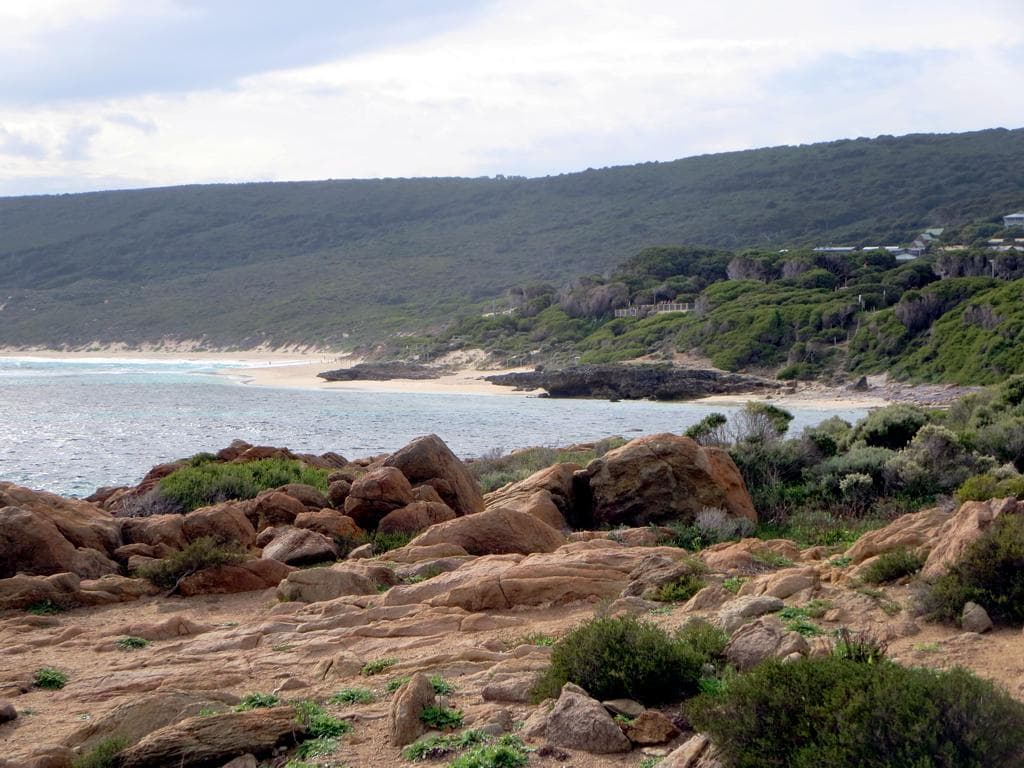
Photo: David Stanley, CC BY 2.0 · via Wikimedia Commons
What marri does differently
Worth mentioning briefly because people ask. Marri ages differently to jarrah. The colour shift is much smaller. A piece of marri made in 1990 still looks essentially the same warmth as the day it was finished, maybe a touch deeper in the heart. The gum veins, if they were filled with epoxy, can yellow slightly. If they were left raw, they darken a little.
If you want a piece that holds its colour, marri. If you want a piece that gets richer with age, jarrah. Both are legitimate choices. The Cottesloe family chose jarrah deliberately because they wanted the colour shift. They got it.
Pieces at different ages
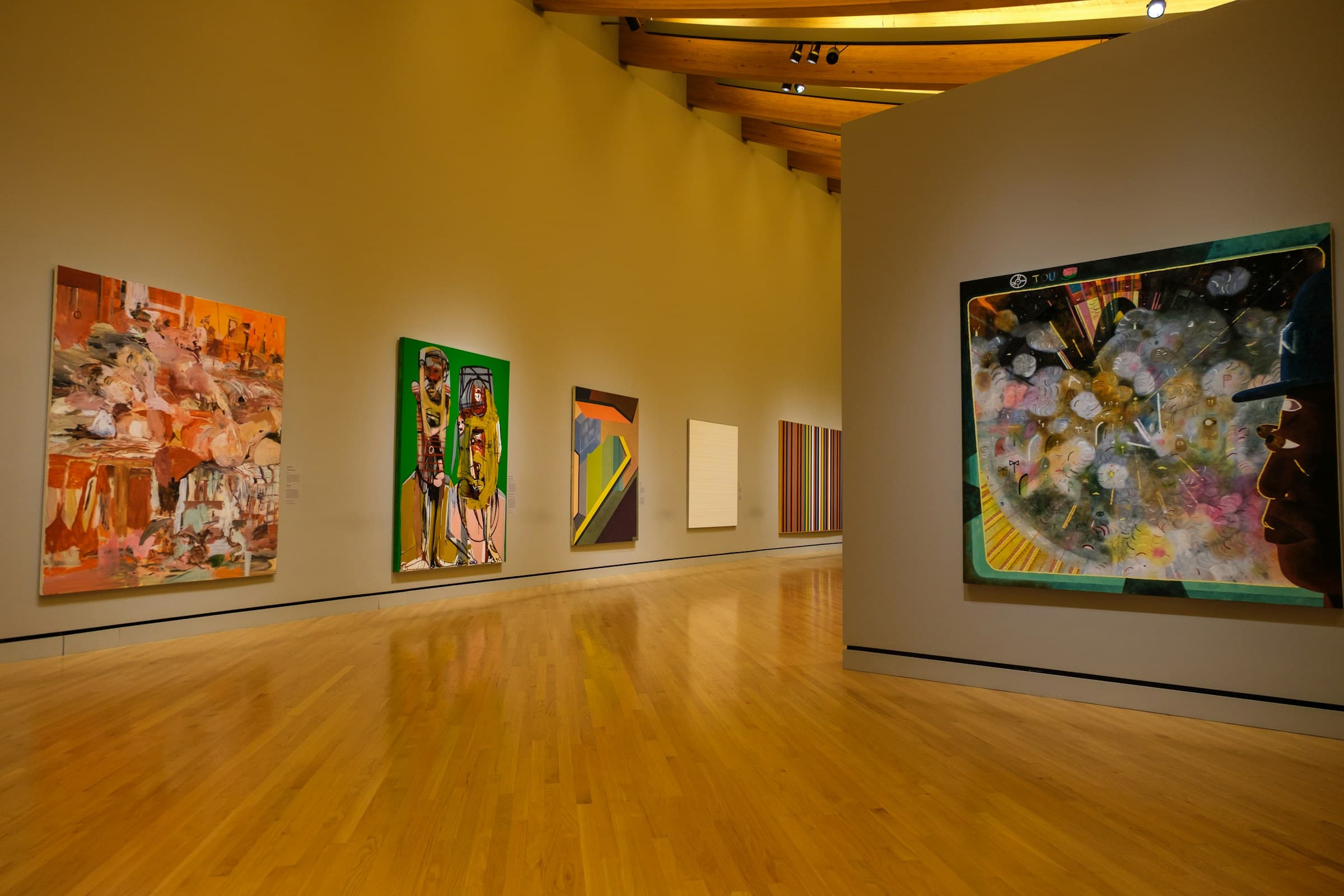
You can see jarrah at three different decades in the gallery on any given day. There's a sideboard near the front door I made in 1995, close to thirty years now, deeply chestnut. There's a coffee table from about 2008, mid-shift, more of an amber-brown than a red. And there's whatever's just come out of the workshop on the back wall, still the bright red of fresh jarrah. Stand and look at the three of them and you can see the whole arc.
That's the best argument I can make for why solid timber furniture is worth the wait and the cost. You aren't buying a finished object. You're buying the start of a piece that will continue to develop for as long as anyone owns it. It is alive in slow motion.
The gallery has pieces at different stages of age: a piece from 1995 next to one from this year. The difference is the point. Blythe Rd, Yallingup. Google Maps sometimes misdirects via Wildwood Rd. Stay on Bussell Hwy, turn at the Carbunup store, then Blythe Rd. Pam's in the gallery. I'm at the bench.
The 1991 table sits in a hallway. It does the work it was made for, and nothing more. That's the best test of a piece I've ever had. Forty years isn't unusual for jarrah. It's the floor, not the ceiling.
Read next: meet the maker behind the bench.
Plan your visit to Yallingup.
Directions & hours →