[Timber]
Caring for Jarrah and Marri Furniture in an Australian Home
Forty years of telling clients the same things. Here are the few habits that make a solid timber piece last properly.

Most timber furniture problems are caused by trying too hard, not too little. The instinct is to polish, to wax, to clean with chemicals. Don't. Solid jarrah and marri want very little. Here's what they actually want.
I've been making this stuff for forty years and I get one or two calls a month from clients asking about care. The questions are nearly always the same. So I want to put it down properly, plainly, so you can come back to it.
The four habits
Four things matter. Everything else is detail.
Wipe spills quickly. Not because the timber will be damaged by water. It won't, in seconds. But because liquids sit and migrate into the surface finish over minutes, not seconds, and wine, citrus juice, and anything with sugar can mark if left.
Coasters for hot, wet, or staining things. A hot mug on bare timber leaves a ring. A wine glass that drips leaves a ring. A bowl of stew left for two hours leaves a ring. None of these rings are catastrophic (they can be repaired), but they're easier prevented than removed.
Keep the piece out of direct sun where possible. A jarrah top under a north-facing window will fade for the first year or two, then darken. Either way the timber moves toward a colour that isn't where it started. For even ageing, find a spot that gets ambient light but not direct beams how jarrah ages over time.
Oil it once a year or so. That's it. That's the whole maintenance regime for an oiled piece.

Photo: Lasthib, CC BY-SA 4.0 · via Wikimedia Commons
Oiling: what, when, how
Most of my pieces leave the workshop with a Danish oil or similar penetrating oil finish. For one of mine, this is the routine.
What to use. Plain Danish oil is fine. Hard-wax oil from a reputable European brand is also fine. Don't use furniture polish from the supermarket. Most of it is silicone-based and builds up a film that interferes with future re-oiling. Don't use linseed oil straight from a tin unless it's specifically the boiled, treated kind for furniture. Don't use mineral oil; it's for chopping boards, not finished furniture.
When. Once a year for most pieces. A dining table that gets daily use might want a re-oil every nine months. A bedhead or sideboard might go two years between coats without trouble. Watch the timber. When it starts to look dry, dusty, or slightly chalky in the light, it's asking for oil. While it still looks alive and slightly warm, leave it.
How. Wipe the surface clean with a barely damp cloth, then dry it. Apply a small amount of oil on a clean lint-free rag. Less than you think. Rub it into the grain in the direction of the grain. Let it sit five to ten minutes. Wipe off any excess with another clean rag. The surface should look satisfied, not wet. Walk away for twenty-four hours before putting anything heavy back on top.
Less than you think. Wipe off any excess. The surface should look satisfied, not wet.
A safety note. Oil-soaked rags can spontaneously combust when bunched up and thrown in a bin. Lay them flat on a concrete surface outside until they're stiff and dry, then bin them. I lose count of how many times I've told people this. It's not a theoretical risk.
Everyday cleaning
Damp microfibre cloth, then dry. That's it. No spray polish, no glass cleaner, no eucalyptus oil concentrate (counter-intuitively, it's too strong and can lift the finish), no household disinfectant.
For sticky spots, a tiny amount of mild dish soap in water on the cloth, then a clean damp cloth to rinse, then dry. The whole thing takes thirty seconds.
For dust, a soft duster. The grain in jarrah and marri doesn't hold dust the way open-pored timbers like oak do, so a quick wipe is plenty.
The Australian climate consideration
Western Australian houses get hot summers and dry winters with low ambient humidity. Solid timber moves with humidity. A piece made in a workshop at 60% relative humidity that ends up in a Perth lounge at 30% humidity in February will shrink slightly across the grain. A piece in a damp room in winter will swell back.
This movement is normal and the joinery in a properly made piece accounts for it. You'll occasionally see a fine hairline along a glue join in deep summer. That's the timber drying, and it'll usually close back up by autumn. Don't panic. Don't try to fill it. When it doesn't close, call the maker.
To help: don't put a piece directly next to an air conditioning vent, a heater, or a wood fire. Don't park a piece in a sealed room that goes from cold to hot quickly. Don't store a piece in a garage and then bring it inside without letting it acclimatise for a week or two. None of these are likely to ruin a piece, but they make the wood work harder than it needs to the jarrah-versus-marri write-up.
Marri-specific notes
Marri has gum veins. When filled with epoxy in the original build, the epoxy is harder than the timber around it, so over twenty or thirty years it can sit slightly proud as the surrounding wood compresses with use. This is normal. A light sand with very fine paper followed by a re-oil will bring it back to level.
Gum veins left raw will darken slightly over the years. They don't need any extra attention.
Marri also takes a hand-oil more readily than jarrah because the grain is slightly more open. Less oil, more wiping, on marri. A piece that's been over-oiled will look slick rather than warm.
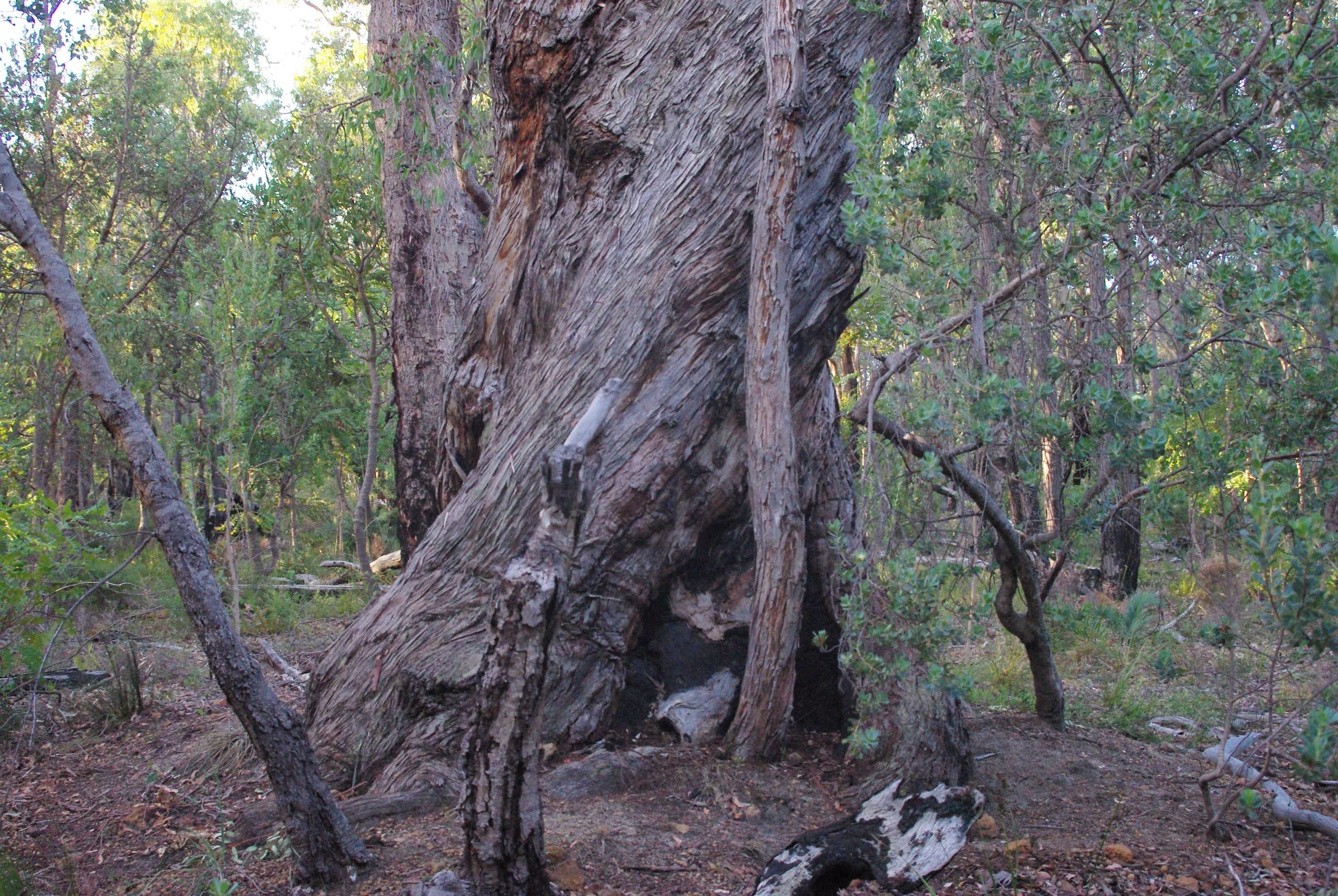
Photo: Lasthib, CC BY-SA 4.0 · via Wikimedia Commons
What to do about marks
Things will happen. Here's the rough hierarchy of fixes.
Water rings on the finish only. Often these come out with a gentle warm-up. Set a hair dryer on low and pass it across the ring at distance for thirty seconds. The trapped moisture migrates out and the ring fades.
Scratches in the finish. A drop of oil rubbed in with a fingertip will hide most light scratches. A deeper scratch: sand the area very lightly with very fine paper (320 grit and finer), then re-oil. The repair will be invisible within a week or two as the colour evens up.
Deeper dents or scorches. Call the maker. I've gone back to clients' houses to repair pieces I made fifteen years ago. It's part of what I do. A serious repair might involve a small re-section of the timber, but most things can be brought back without anything dramatic.
Don't sand the whole top yourself without real experience. A jarrah top that's been sanded by an enthusiastic owner can lose its character very quickly. The patina is the asset. Preserve it.
What not to do
A short list, because the instinct toward these things is strong.
- Don't use furniture polish in a spray can.
- Don't use coconut oil, olive oil, or any kitchen oil. They go rancid.
- Don't put plastic placemats permanently on a timber surface. They trap moisture and can leave shapes.
- Don't drag pieces across the floor. Pick them up. Splits along legs often come from being dragged sideways.
- Don't store pieces in a garage long-term without climate stability.
Got a piece of mine that wants a proper service, or a piece by someone else needing a second opinion? Bring it to the gallery. Blythe Rd, Yallingup. Google Maps sometimes misdirects via Wildwood Rd. Stay on Bussell Hwy, turn at the Carbunup store, then Blythe Rd. Call ahead and Pam will have it noted when you arrive.
A piece of jarrah or marri furniture wants to last. It will, given the chance. Do less, not more. Oil it once a year. Wipe spills. Use coasters. Don't park it in the sun. That really is the whole list.
Read next: how a custom dining table gets commissioned.

Plan your visit to Yallingup.
Directions & hours →