[Workshop]
Forty years at the bench, on the same patch of bush.
John Streater is a furniture maker in Yallingup, Western Australia. This is his workshop on Blythe Road, and how it came to be here.
John was twenty-five, driving across the Nullarbor with a surfboard, when he came over the hill and saw the ocean.
That was 1982. He never went home. He spent the next six years working under a local Yallingup furniture maker, learning the structural properties of the region's slow-grown hardwoods. Not the design so much as the doing: how to dress a board, how to read a length of jarrah and know where the heart of the tree was before you cut, how to mark a joint and cut to the line. In John's words, “the things that don't have names and you can't write down in a book.”
1988: the workshop on Blythe Road
John had been watching a block on Blythe Road for a couple of years. It sat back from the road among the peppermints, with the right kind of quiet around it. In 1988 he and Pam bought it, and John raised the workshop he still works in, with help from a couple of mates, over the course of a year. Jarrah framing. Southwest limestone, quarried less than twenty kilometres away. He didn't draw plans for how the building should look, only for what it needed to do. The limestone keeps the workshop cool in February and warm in July.
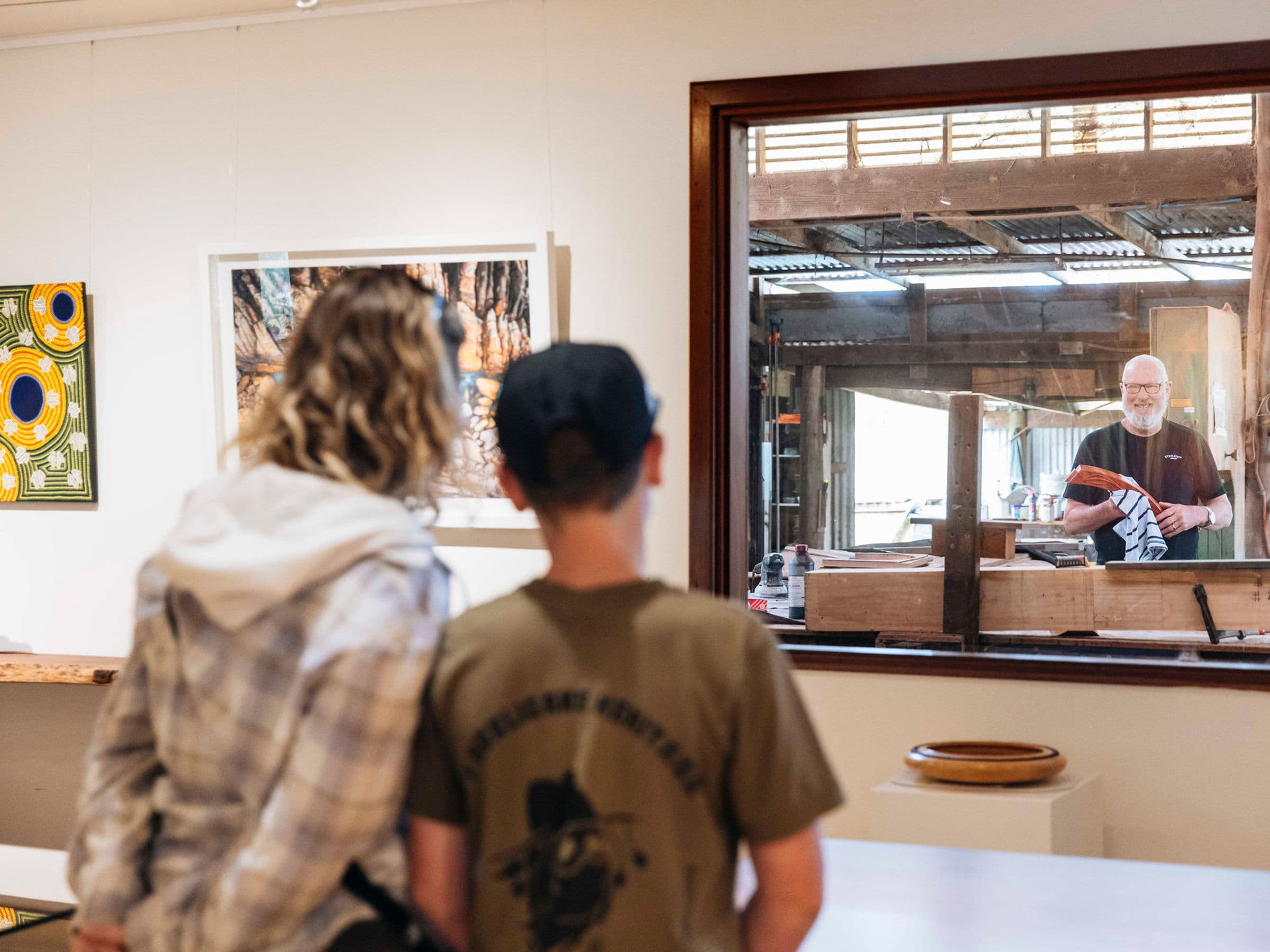
The viewing window between the workshop and the gallery was there from the first day. Most galleries hide the work; John wanted people to watch it happen. You walk in, look at the finished pieces, look through the glass, and see how they get made. He is still at the same bench. It has been resurfaced three times.
Pam and the gallery
The gallery came a decade later. Pam Streater curates it and runs the floor, and she reads a room the way John reads a board. She knows which visitors want to be left alone and which want to talk for an hour. Pam usually gets the whole story out of them. John gets the dimensions.
In 2009 Pam and John opened the walls to other makers. Today the gallery shows John's furniture alongside the work of artists they admire: glass, painting, photography and sculpture, drawn from across the southwest.
“I wanted to create Australian culture in my furniture.”
The timber is jarrah, marri and tuart: slow-growth hardwoods unique to the southwest, each chosen for the grain it carries. John sees himself, in his own words, as a custodian of the trees and timber in the area. He finds the wood first. A slab sits in the workshop for weeks, sometimes months, before he decides what it should become, and then he draws something that works with what's there rather than against it.
“A piece of jarrah is a piece of country. The grain in a board is the record of the seasons that tree lived through.”
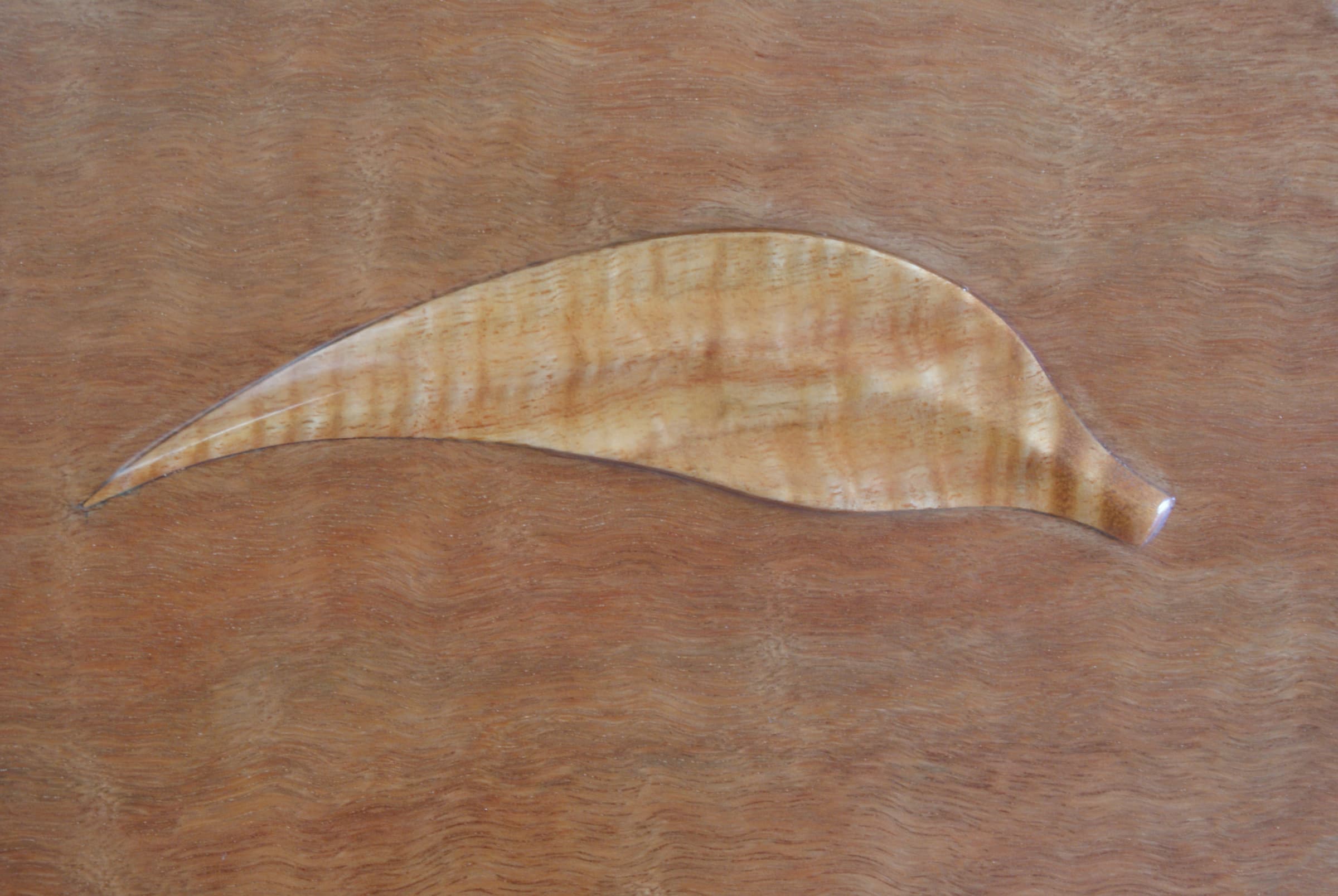
Every piece carries an inlaid gum leaf, hand-carved into the timber and placed somewhere quiet.
You won't always see it. Inside a drawer, on the underside of a tabletop, tucked into the back of a cabinet. It is there on every piece John has finished since the beginning: an authentication, in his own hand, for future generations.
The pieces that became known
The Cone Table, first designed in the early 1980s, is the one people ask about most. The all-timber base is complex enough that only seven originals exist; the imitations swap it for stainless steel. The Pyramid Desk (1996) is tailored to the room it will live in, so no two are the same. The Parallel Universe Table (2014) cradles a long jarrah top on two arched buttresses, a dining table you can also read as sculpture.
The work bridges into architecture, too. John collaborates as an integrated services partner with Mayfair Projects, the design-and-build studio run by his son Rowan Streater, fitting bespoke timber into homes the family has helped to shape from the ground up.
Press and listings
John has been quoted in The Australian; the line above about Australian culture is his, from that piece. The gallery is listed in the Margaret River Region's official visitor guide and reviewed by visitors on TripAdvisor.
“The pristine environment which I live in. And meeting and greeting the wonderful visitors from all over the world, telling them my story and listening to theirs.”
That is John's answer when people ask why he is still here. The pieces leave with the people who buy them. The workshop, the bench and the walls stay on Blythe Road.
From the blog
Come down Blythe Road and see the bench.
Plan your visit →