[Timber]
Five WA Hardwoods Every Furniture Buyer Should Know
A working maker's guide to the five timbers I reach for most often — what they are, where they grow, and what they'll do for you over fifty years.
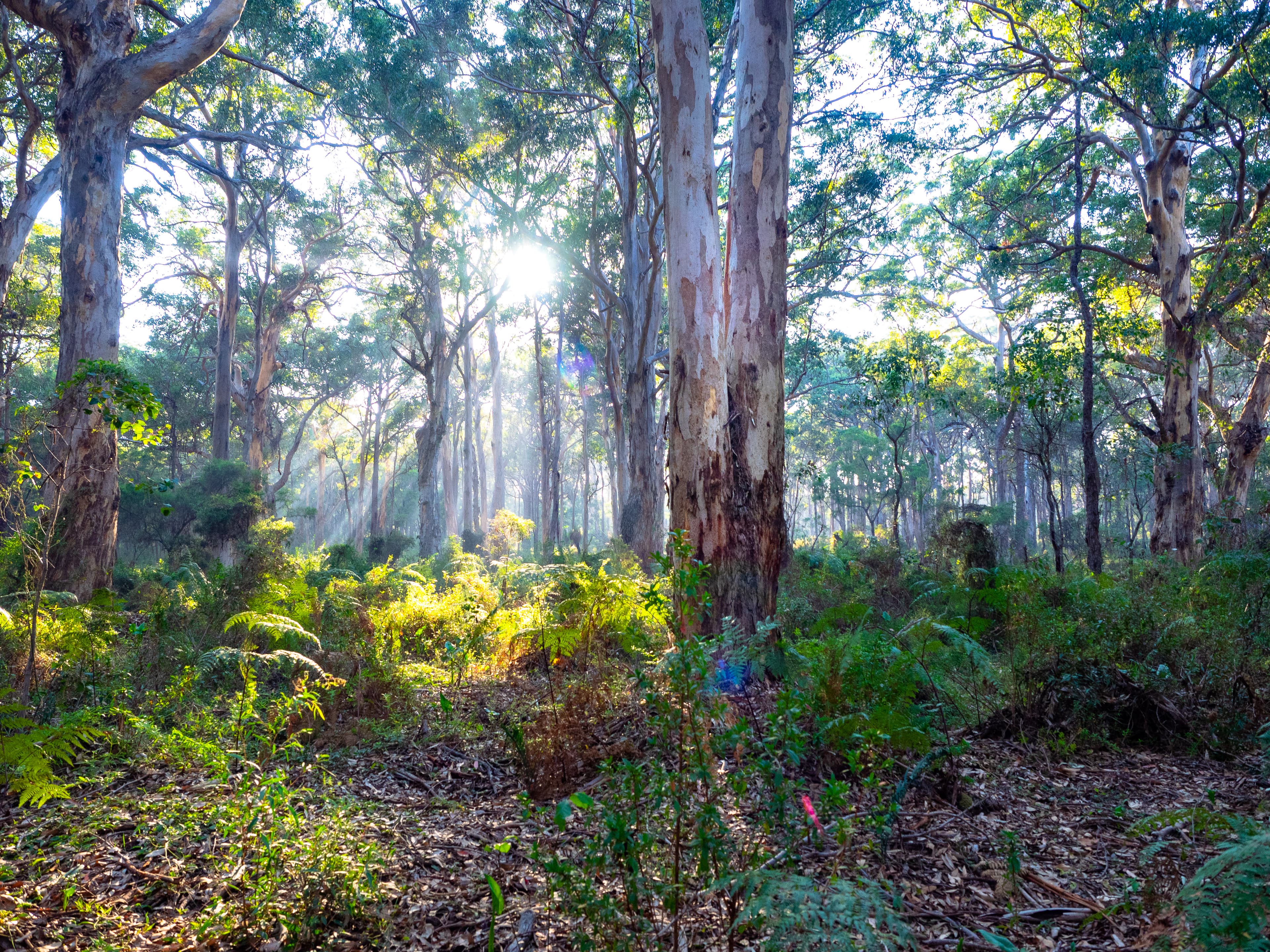
Most people buying furniture don't know what they're buying. That's not a criticism. Why would they? But to live with a piece for fifty years, you deserve to understand what it is.
Pam and I have been working timber on Blythe Rd in Yallingup since 1982. In that time I've put my hands on a lot of wood, and I've come to think of the five timbers below as the spine of what we do in the South West. They're not the only ones. But walk into our gallery and pick up a piece, there's a strong chance it began as one of these.
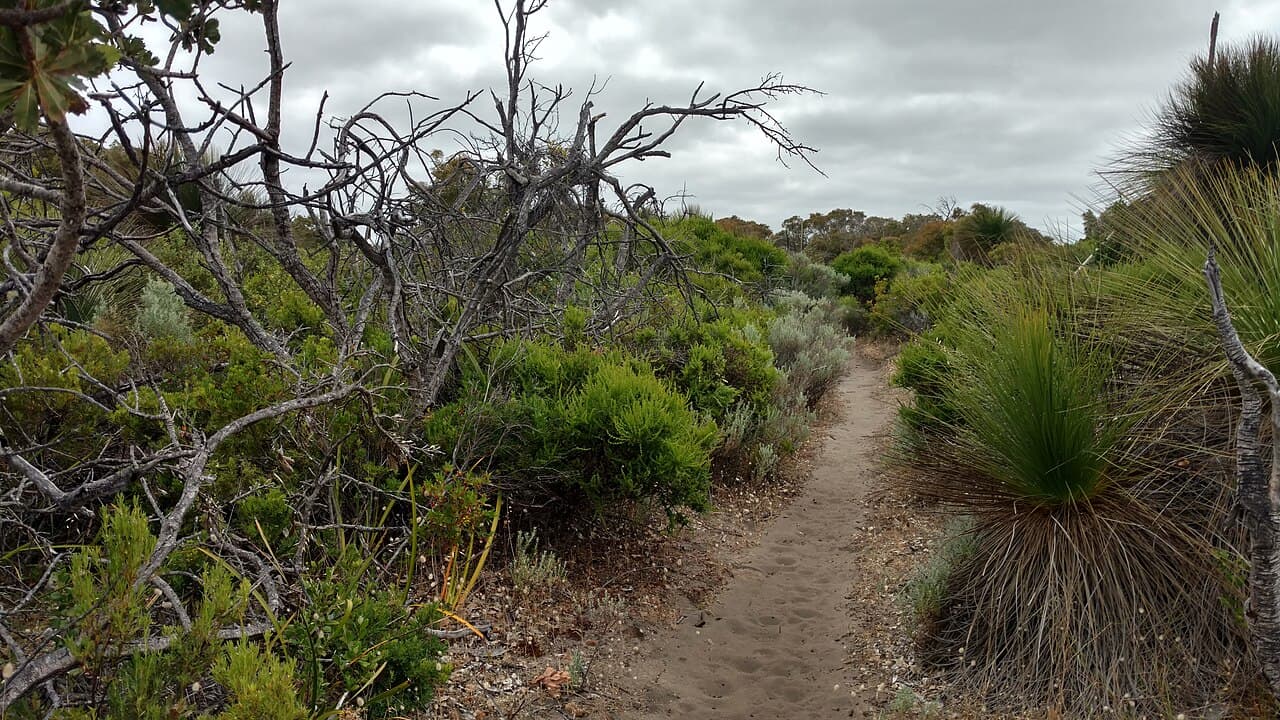
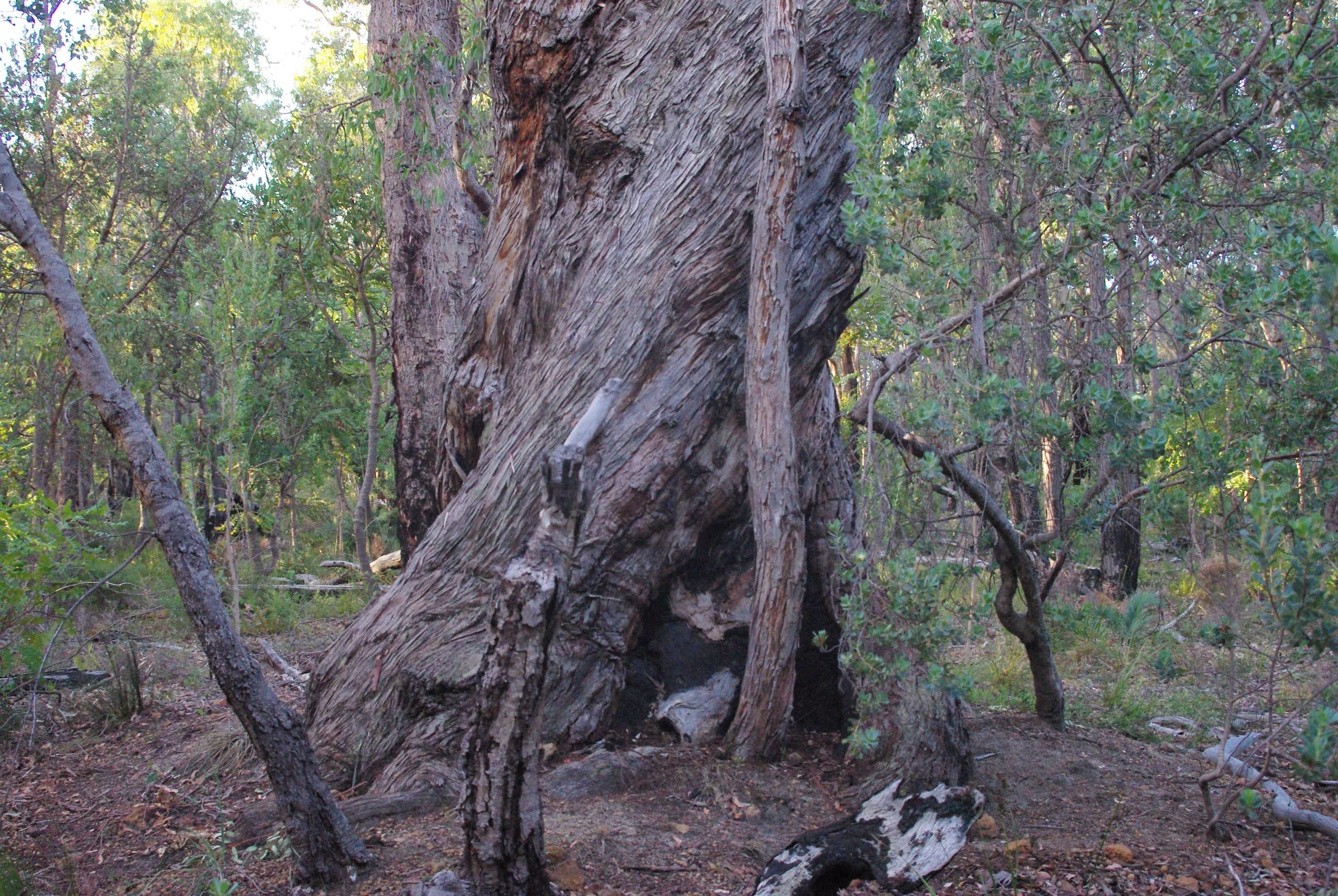
Photo: Lasthib, CC BY-SA 4.0 · via Wikimedia Commons
1. Jarrah
Jarrah is the timber most people already half-know. Anyone who's never thought about wood in their life has probably stood on a jarrah floor in an old Perth house and felt it underfoot.
It grows in the South West and pretty much only the South West. Eucalyptus marginata. A slow-growing hardwood that takes a century or more to put on the kind of timber I want to work with. The colour is the giveaway: deep red, sometimes almost purple in old growth, fading to a warmer brown as it ages with light. The grain runs straight more often than not, which is part of what makes it such a forgiving timber for a maker.
What I love about jarrah is its weight. It feels honest when you lift it. A jarrah dining table will not move on you. It won't sag, it won't twist if it's been dried properly. You can pass it to your grandchildren and they'll pass it to theirs. That's the brief I'm working to.
It also takes oil beautifully. I don't lacquer my pieces. A hand-rubbed oil finish lets the timber keep breathing, and on jarrah it pulls the red out of the grain in a way no synthetic finish can match.
the jarrah-versus-marri write-up
2. Marri
Marri is jarrah's quieter cousin. They grow side by side in the same forests, and for years marri was treated as the second-best, the timber you used if you couldn't get jarrah. That's a mistake I'm glad the industry has finally moved past.
Corymbia calophylla. Pale honey colour, sometimes with pink running through it. The thing that sets marri apart, and the reason I reach for it as often as I do, is the gum vein. Marri trees fight off insects and damage by sealing wounds with a dark resin, and that resin shows up in the timber as black streaks and pools. Some people see it as a defect. I see it as the tree's signature.
A marri dining table with a strong gum vein down the centre is a piece of landscape. You're looking at sixty years of a tree's life. It's the closest thing furniture can get to a painting.
A marri dining table with a strong gum vein down the centre is a piece of landscape. You're looking at sixty years of a tree's life.
Marri is also a touch lighter than jarrah and a little easier to work. Slightly softer under the chisel, but still well within the hardwood family. For dining tables and benches it sits in a sweet spot.
3. Sheoak
Now we get to the one I want to talk about. Sheoak is underrated. The grain is extraordinary.
Allocasuarina fraseriana, the South West sheoak. It doesn't grow into the great forest giants like jarrah or karri. It's a smaller tree, often a bit twisted, and you don't get the huge clear boards out of it. What you get is something else entirely.
When you quarter-saw sheoak, the medullary rays in the timber catch the light and produce a pattern that looks like brushstrokes: flecks and ribbons of a deeper colour running through a warm reddish-brown ground. Photographs don't do it. You have to stand next to a sheoak top in side-light and watch the pattern shift as you move.
I use sheoak for smaller pieces: side tables, occasional chairs, jewellery boxes, the lids of larger pieces. Anything where the grain is the point. A whole dining table in sheoak is rare and a slightly different beast; the timber is harder to source in those dimensions, and the pattern can become almost too much across a big surface. On the right piece, though, it's the most beautiful timber I work with.
The other thing worth knowing: sheoak is dense. It machines a bit like working stone. You feel it in your wrists at the end of the day.
4. Blackbutt
Blackbutt is a working timber. Eucalyptus pilularis, though the WA equivalents we use include some closely related species. The colour is a pale yellow-brown, sometimes with a slight pink in it. The grain is straight, the texture is even, and it behaves itself.
I include blackbutt on this list because it's the timber I'll suggest if someone walks into our gallery and tells me they want something hard-wearing and a little lighter visually than jarrah. Kitchen tables in young households. Benches that are going to take a beating from kids and dogs. Floors. Bench tops. Anywhere life is going to happen at speed.
It's also one of the better Australian hardwoods for outdoor furniture, given the maintenance. It has natural durability and holds an oiled finish well in our climate.
I won't pretend blackbutt has the romance of marri or the drama of sheoak. It's the apprentice in the room: quiet, capable, will outlast you. There's a place for that.
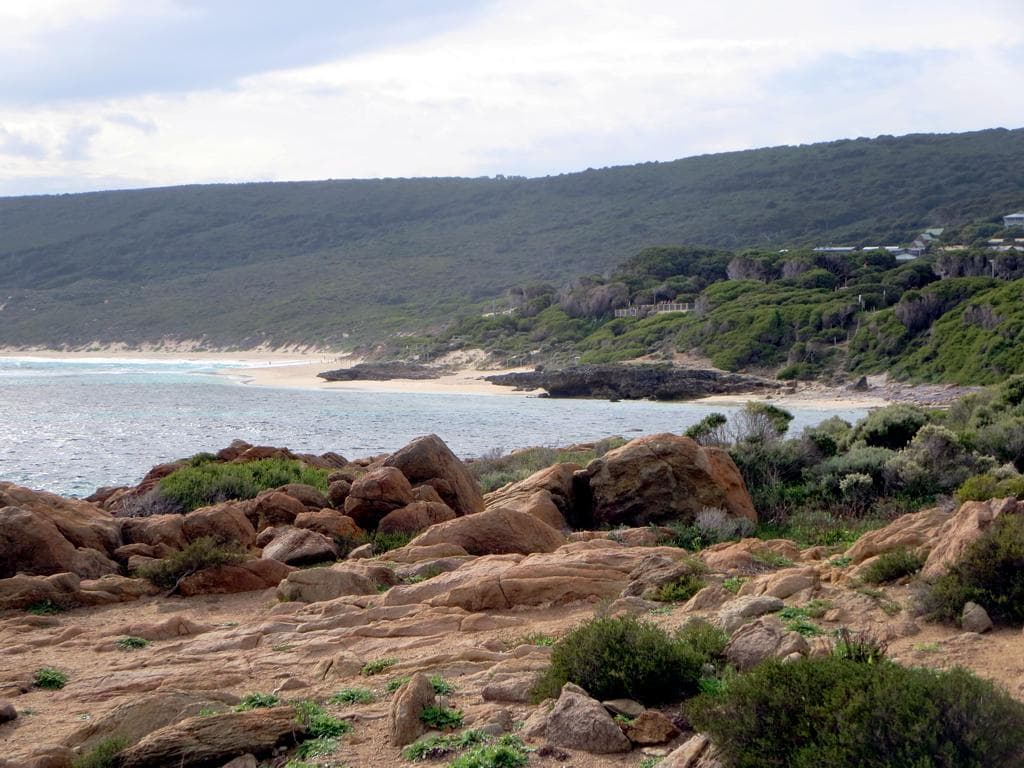
Photo: David Stanley, CC BY 2.0 · via Wikimedia Commons
5. Tuart
Tuart is the rare one. Eucalyptus gomphocephala. It grew in a fifty-kilometre strip of the South West coast and that's it. Roughly Busselton to north of Yanchep, in the band of limestone soils along the coastal plain. Outside that strip you don't get it.
Old-growth tuart trees were enormous: three metres across at the base, two hundred feet up. They were milled hard through the colonial period because the timber is exceptional: pale, very hard, dense, with a tight interlocking grain that takes a polish like nothing else. Wheel hubs and railway sleepers were made from it. Whole woolsheds.
Most of the old tuart forest is gone. What you can still get today is mostly recycled: beams pulled out of old buildings, timber from controlled removals, occasional dead-fall. I use tuart sparingly, for pieces where the provenance matters as much as the result. A tuart top has a creamy density to it that no other South West timber matches.
If you ever see a piece of furniture made of tuart, ask where the timber came from. A good maker will be able to tell you the building it was pulled out of, or the year the tree came down. That story is part of what you're buying.
How to ask a maker the right questions
Here's the part of this article that's worth more than the timber descriptions.
Walk into a gallery or a furniture shop wanting to know whether you're being offered something real, ask these questions. A good maker will love that you're asking. A salesperson selling imported furniture under a local label will fall apart on the second one.
When people come into our gallery, Pam usually gets there first. She can tell inside two minutes whether someone wants to be left alone to look or wants to ask questions. When they want to ask, she sends them through to me. By the time they reach the workshop door, she's already told me what they're interested in and what their house is like. It saves a lot of ground.
The truth is, you don't need to become a timber expert to buy good furniture. You just need to find a maker who treats the wood with respect and is willing to talk to you about it. Forty years of working these five timbers and I'm still learning what they want to do.
Our gallery has pieces in jarrah, marri, sheoak and the occasional tuart at any given time. If you're driving down to Yallingup, come in and see us. Handle a few boards, see the grain in actual light. Google Maps sometimes misdirects via Wildwood Rd; stay on Bussell Hwy, turn at the Carbunup store, then Blythe Rd.
how to care for a jarrah piece
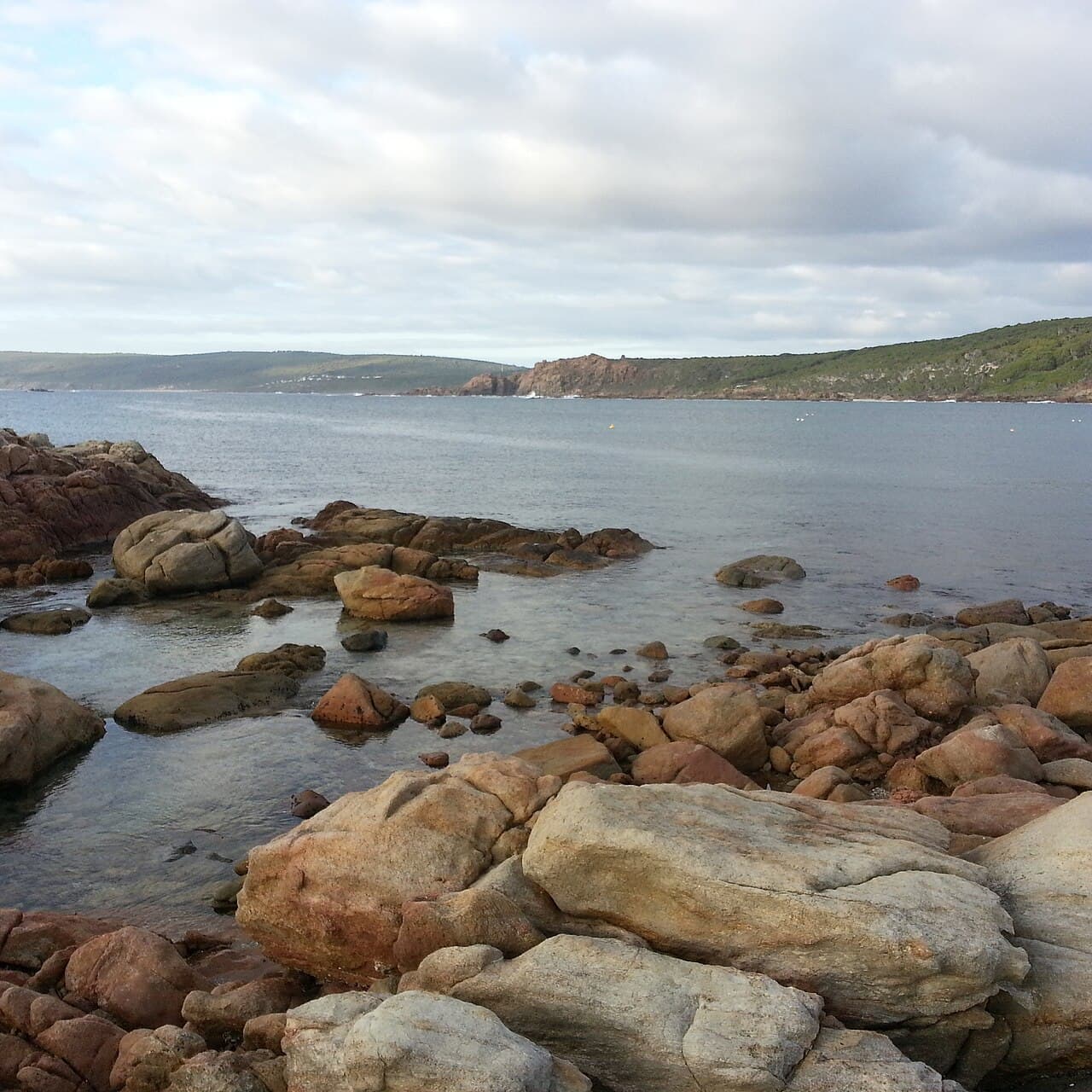
Photo: Lasthib, CC BY-SA 4.0 · via Wikimedia Commons
A piece of jarrah came out of a forest somewhere south of here. A marri table top was a tree that lived eighty years on a granite ridge. Sheoak grew in the understory, twisted around the bigger trunks, and waited. Tuart held up someone's grandfather's shearing shed. When I'm working at the bench I think about all of that, and so should you when you choose a piece.
The wood remembers where it came from. The job of a furniture maker is not to make it forget.
Plan your visit to Yallingup.
Directions & hours →