[Region]
Whale Watching Near Yallingup
A local's notes on where to stand, when to look, and what you'll actually see when the humpbacks come through Geographe Bay each spring.
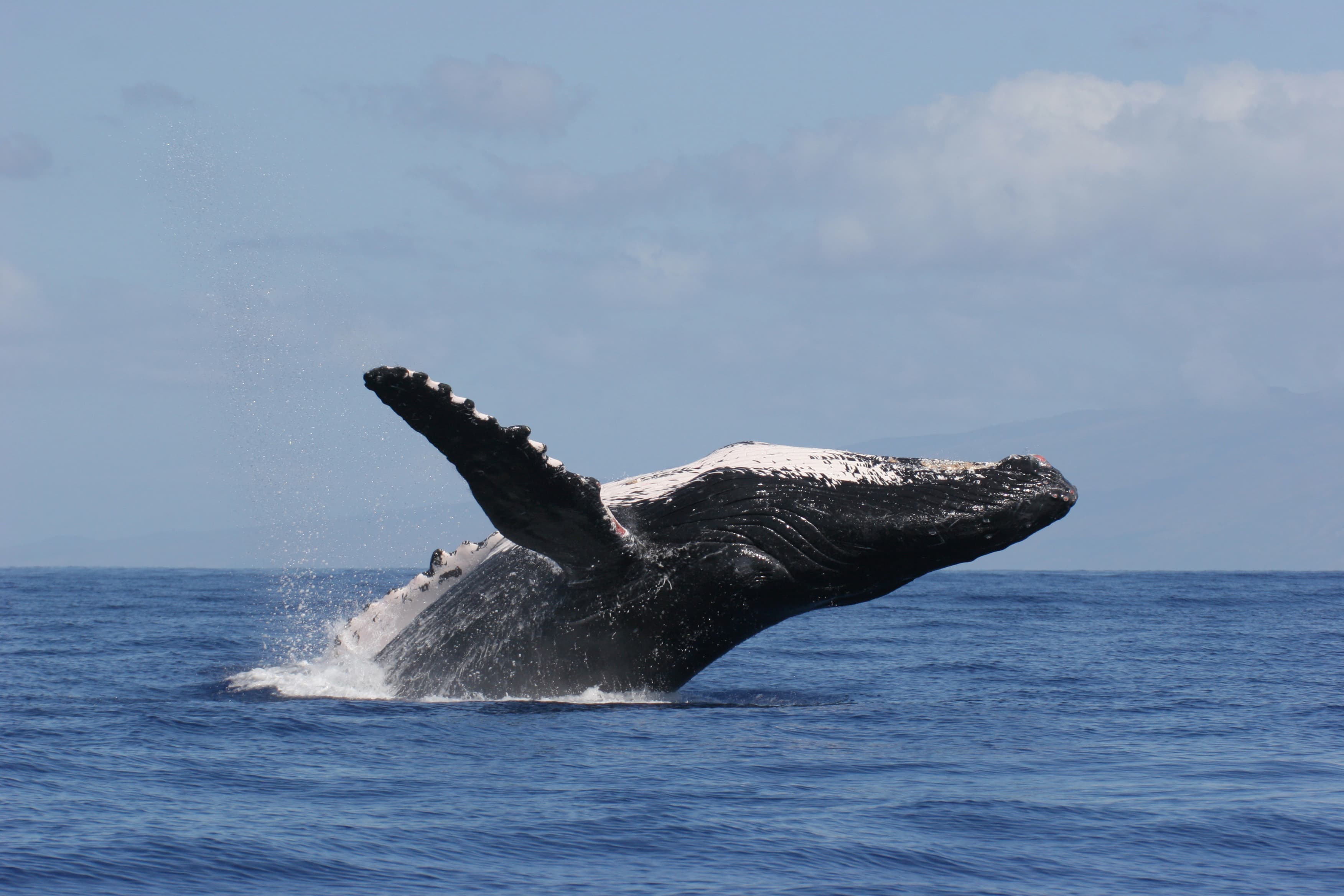
The first time I saw a humpback breach off Sugarloaf I was on my way home from the workshop and I had to pull the ute over.
That was a long time ago now. The whales have been coming through every spring since well before I turned up in Yallingup in 1982, and they'll keep coming long after the rest of us stop paying attention. But once you start looking, you don't stop. Forty years on Blythe Rd and the migration still rearranges my September.
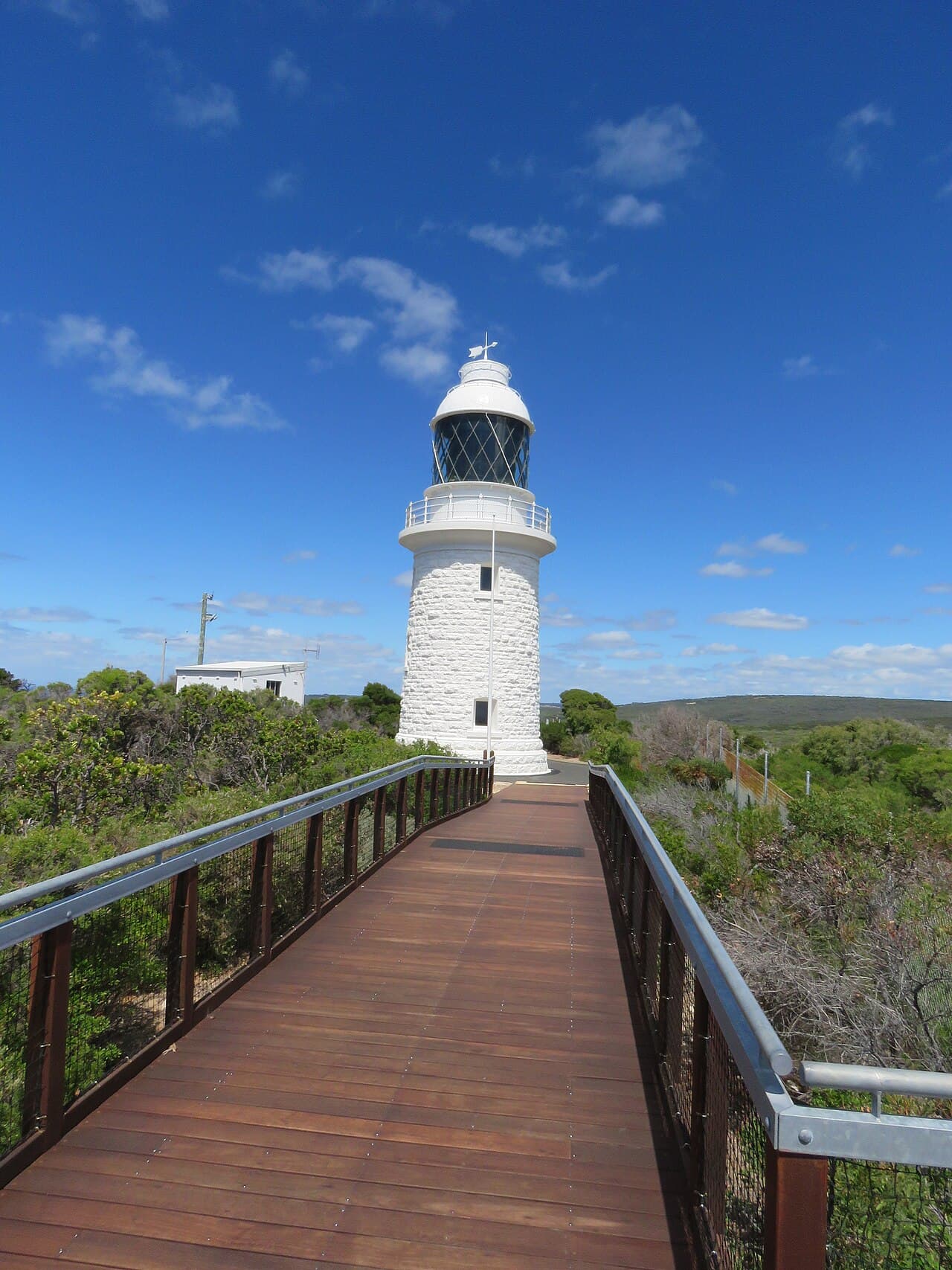
Photo: Calistemon, CC BY-SA 4.0 · via Wikimedia Commons
This is not a charter post. There are good operators running boats out of Augusta and Dunsborough (I've been on a couple) but most of the whale watching I do is from land, with a thermos and a pair of binoculars, and that's what I want to write about.
When the whales come
The humpbacks move up from the Antarctic feeding grounds in winter, calve and rest in the warm water near Exmouth, and then bring the calves back south through our coast from September through to early December. Southern right whales come too, in smaller numbers and usually further offshore.
September is when it starts. By mid-October you can stand on the cape on a good morning and see four or five animals working the bay at once. By late November things thin out. The calves are bigger by then and the mothers move faster.
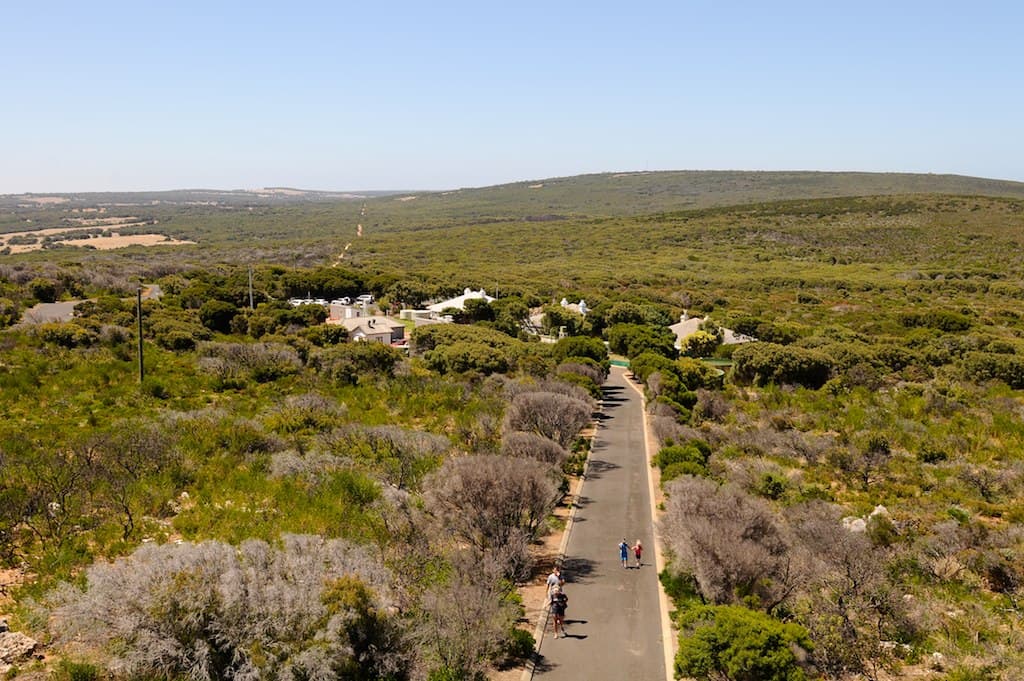
Photo: Stuart Sevastos, CC BY 2.0 · via Wikimedia Commons
A pattern I've noticed over the years: a still morning with a long swell and a high tide will give you the best sightings. If there's whitecaps everywhere, the spouts disappear into the chop and you'll miss most of what's there. Calm and grey beats sunny and windy nearly every time.
Cape Naturaliste: the obvious spot
Drive up to the lighthouse and walk out to the Cape Naturaliste Lighthouse whale watch platform. The staff usually have a sightings board up. The platform sits well above the water and you can see right down the curve of Geographe Bay. On a good day you'll see spouts before you see the animals themselves: a small puff that hangs for a second and then drifts.
Take a jumper. It's always five degrees cooler up there than people expect, and the wind comes in off the Indian Ocean with nothing in the way of it.
The walk out along the headland past the lighthouse is the part most people skip. Don't. There's a track that runs west along the cliffs for about a kilometre and it gives you angles you can't get from the main lookout. Find a flat rock, sit down, and don't move for twenty minutes. That's the trick. People walk up, scan the water for thirty seconds, decide there's nothing there, and walk off. The whales are there. You have to give the bay time to show you.
Sugarloaf Rock: my favourite
Three minutes back down the road from the lighthouse there's a turnoff signed Sugarloaf Rock. This is where I go.
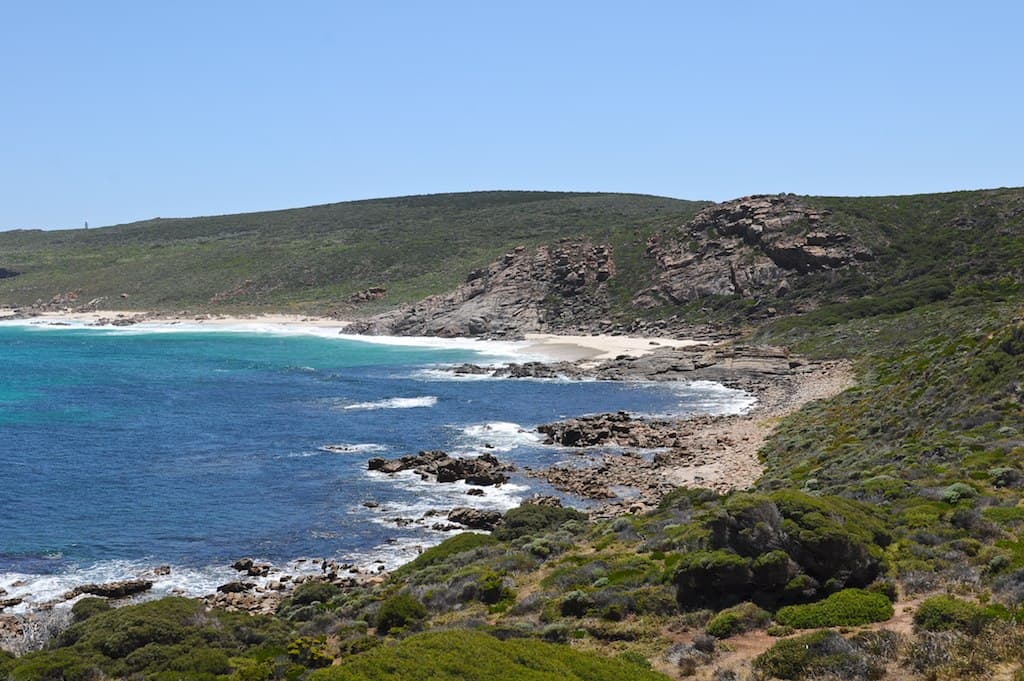
Photo: Stuart Sevastos, CC BY 2.0 · via Wikimedia Commons
Sugarloaf is a great granite tower sitting just off the coast. The carpark is small, the walk is short, the viewing platform is unfussy. What it has that the lighthouse doesn't is depth. The seabed drops off quickly, which means the whales sometimes come in closer than you'd believe. I've watched mothers and calves rolling about a hundred metres off the rock. You don't need binoculars when that happens. You just need to be quiet.
Ospreys nest on top of Sugarloaf in spring. If you see something pale circling above the rock with slow wingbeats, that's them. The whales and the ospreys are doing the same thing, making the most of the south coast in October, and there's a kind of symmetry to it that I always notice.
Bunker Bay and the eastern side
If the wind's coming from the west you'll get nothing at Sugarloaf. The water turns rough and the spouts disappear. On a westerly day, drive around to the eastern side of the cape: Bunker Bay, Shelley Cove, the walk out to Castle Rock. The cape itself blocks the wind and you'll find water like glass on the eastern shore. Whales still cut through there, especially in October. Fewer of them, but you can see further.
whale-watching season, properly
What you'll actually see
Most of what you see is breath. A spout, then a slow grey curve of back as the whale rolls forward. Sometimes a tail fluke before a dive, flat and dark and gone. That's the bread and butter of land-based whale watching.
On a lucky day you'll see a breach. A full humpback breach is something I don't have a sensible word for. It's slow, somehow, even though it's happening fast. They come most of the way out of the water and then fall back in a kind of sideways collapse and the sound carries across a kilometre of open ocean.
Pec slaps are more common. The whale lies on its side and slaps the water with its long pectoral fin. They do it for a reason (communication, parasites, fun, nobody really knows) and they'll do it for half an hour at a time. If you spot a slap, stay put. They keep going.
A full humpback breach is something I don't have a sensible word for. It's slow, somehow, even though it's happening fast.
A few practical notes
Spring in the South West
The whales are part of a longer rhythm. The wildflowers come out at the same time, the days warm up, the swell settles down. Already coming for whales? Plan a couple of days for the spring. The country up on the cape changes weekly between September and November.
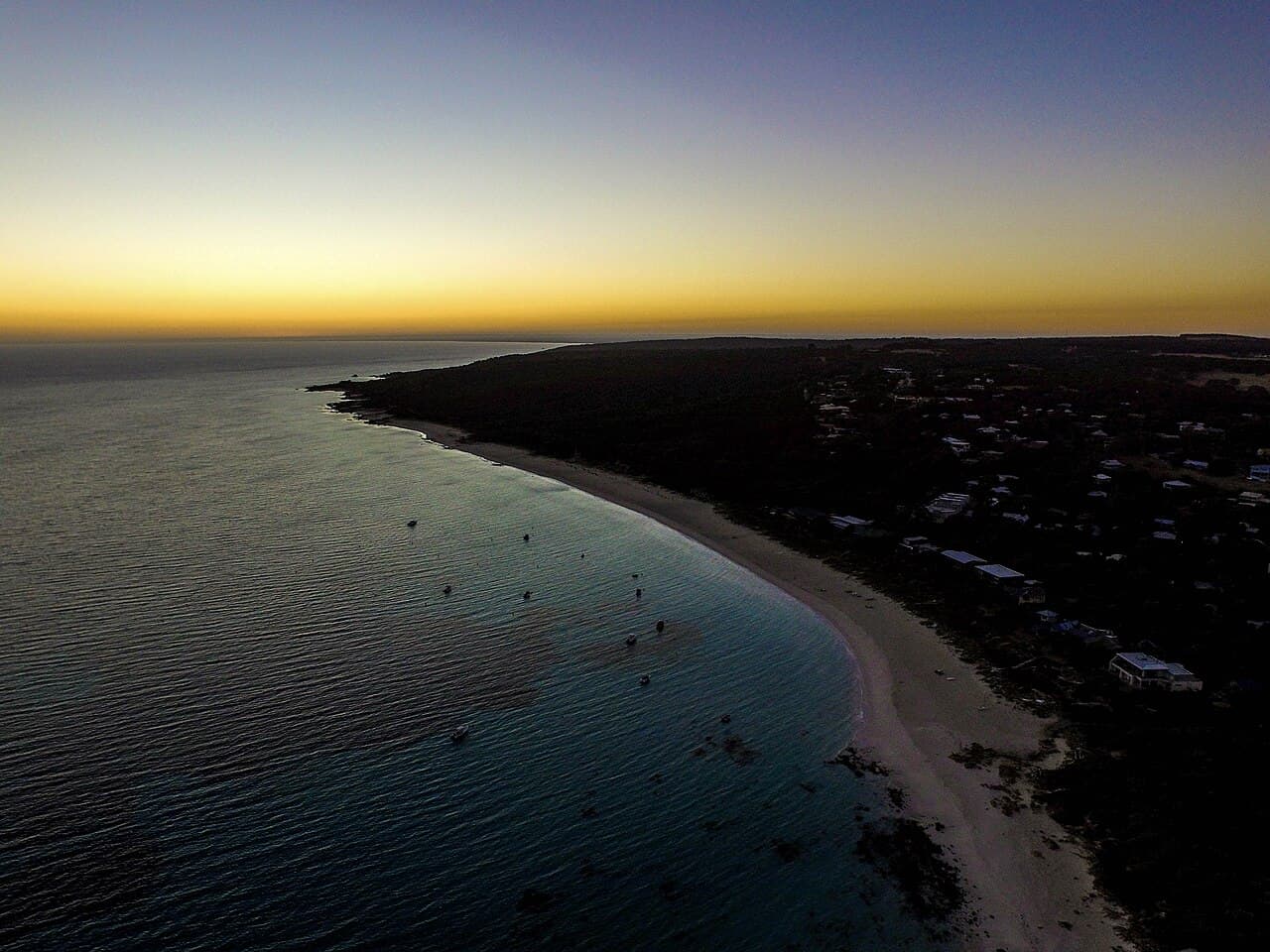
Photo: Harry Foley, CC BY-SA 4.0 · via Wikimedia Commons
How to find the gallery afterwards
Google Maps sometimes misdirects via Wildwood Rd when people are trying to find me. Stay on Bussell Hwy, turn at the Carbunup store, then Blythe Rd. Save yourself the detour.
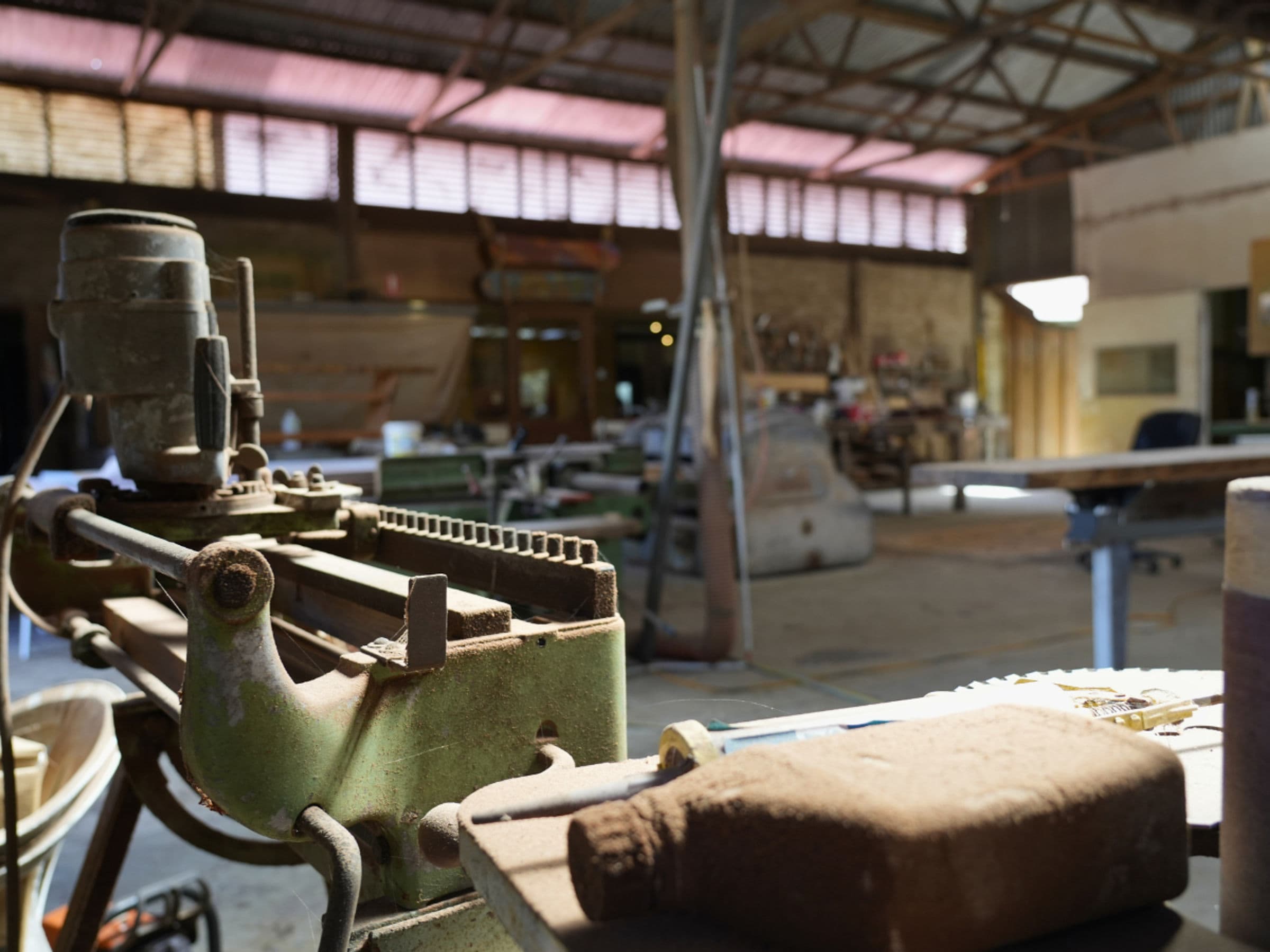
After Cape Naturaliste, the jarrah in my gallery came from the same forests you drove through to get here. Blythe Rd is half an hour south of the lighthouse. Solid jarrah walls, southwest limestone, the workshop window so you can watch the work. If the flag's flying, we're open.
I take a coffee up to Sugarloaf most weeks in October. Doesn't matter what's on at the workshop. If it's a still morning I find half an hour. The whales don't owe you anything. Some days you'll see nothing for an hour and then four spouts at once. Other days you'll stand there in the cold and go home with nothing. Both kinds of days are worth having.
Autumn pulls me back to the workshop. Spring pulls me out to the cape. That's how the year works around here.

Plan your visit to Yallingup.
Directions & hours →