[Region]
Cape Naturaliste Lighthouse: A Complete Visitor's Guide
A local's guide to the lighthouse I take everyone to — what to see, when to go, and the road back through Sugarloaf that most visitors miss.
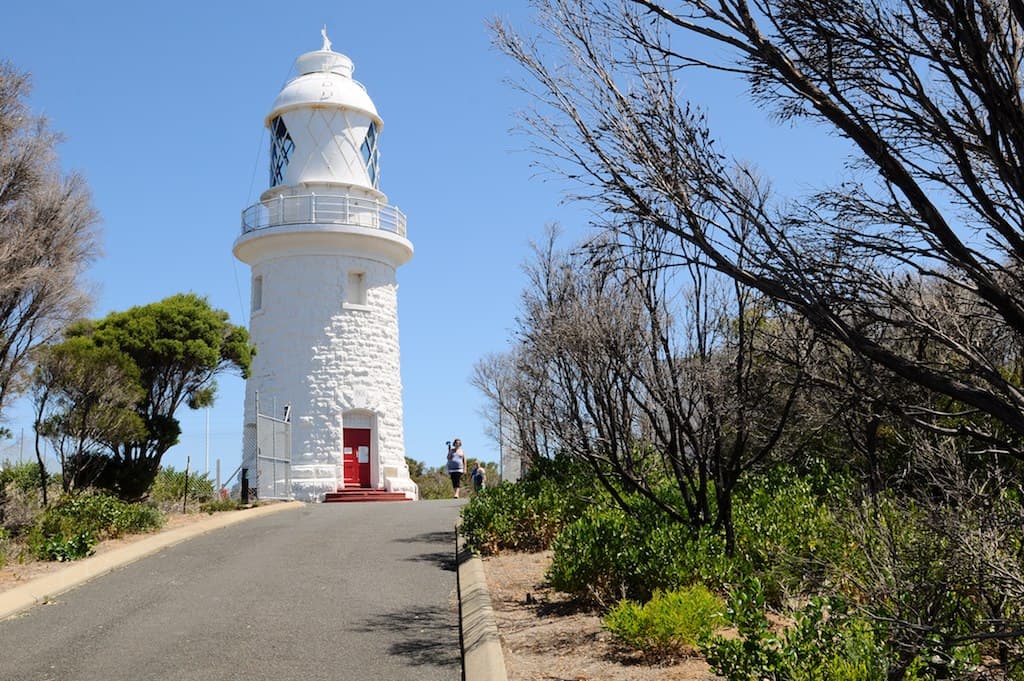
I take everyone there. Doesn't matter where they're from or what they've planned to do. Cape Naturaliste is the one that makes people understand why I've stayed.
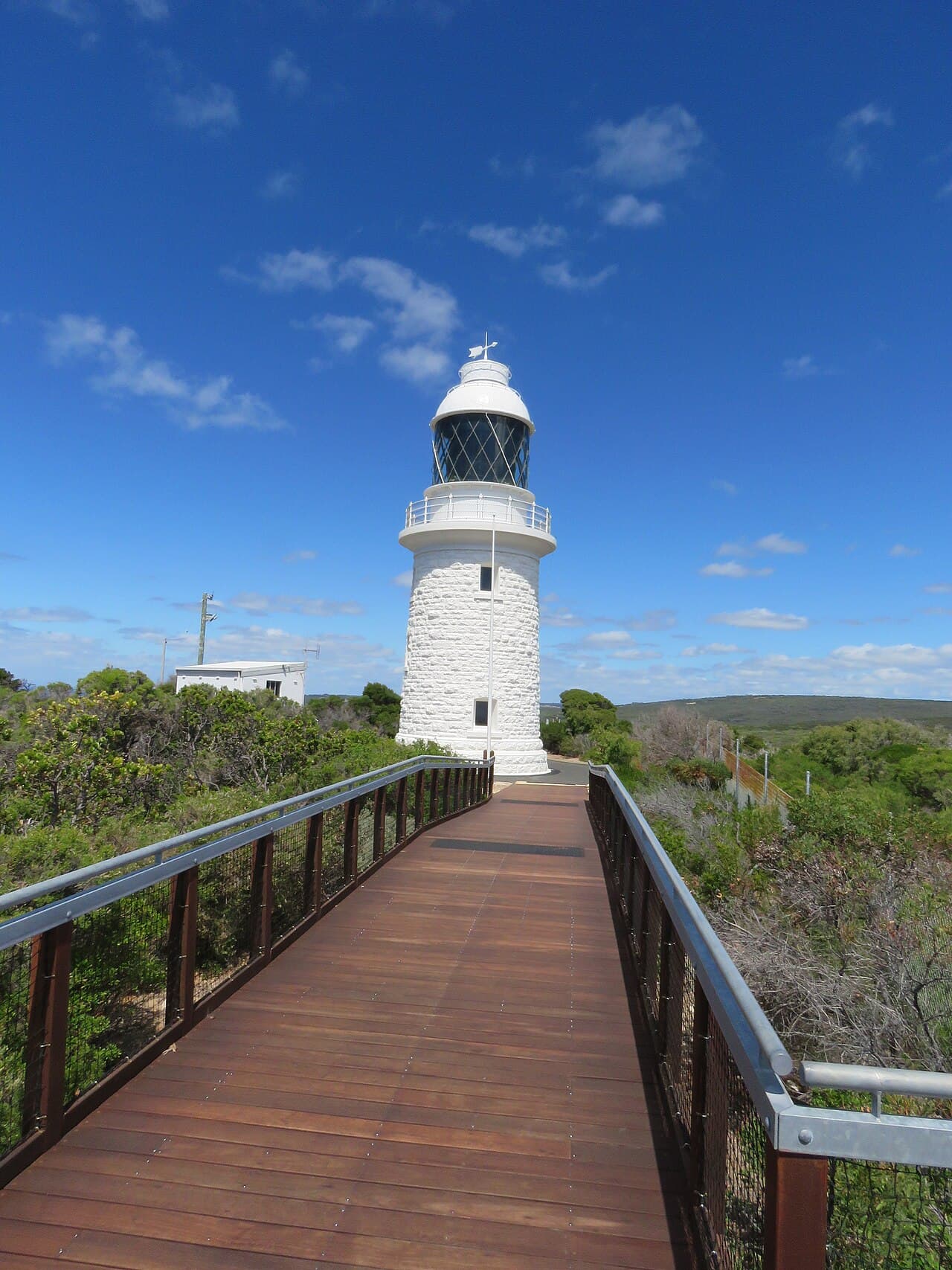
Photo: Calistemon, CC BY-SA 4.0 · via Wikimedia Commons
When new visitors arrive at our gallery (clients picking up a piece, friends down for the weekend, someone who's driven all the way from Perth) the first thing I tell them is to drive up to the cape before they do anything else. Not because the brochures say so. Because once they've stood on that headland and looked down the curve of Geographe Bay, the rest of the region clicks into place. They stop seeing a list of things to do and start seeing a coast.
Getting there
From Yallingup it's a short drive, fifteen minutes if you take it slow, which you should. Head north along Caves Road and then Cape Naturaliste Road right out to the end. The road runs through bushland that thickens as you go, peppermint and banksia closing in on either side, and then it opens up at the carpark.
From the carpark it's a short walk up to the lighthouse itself. There's a small interpretive area, a cafe, and the path that leads out around the headland. You don't need to plan much. Just allow longer than you think.
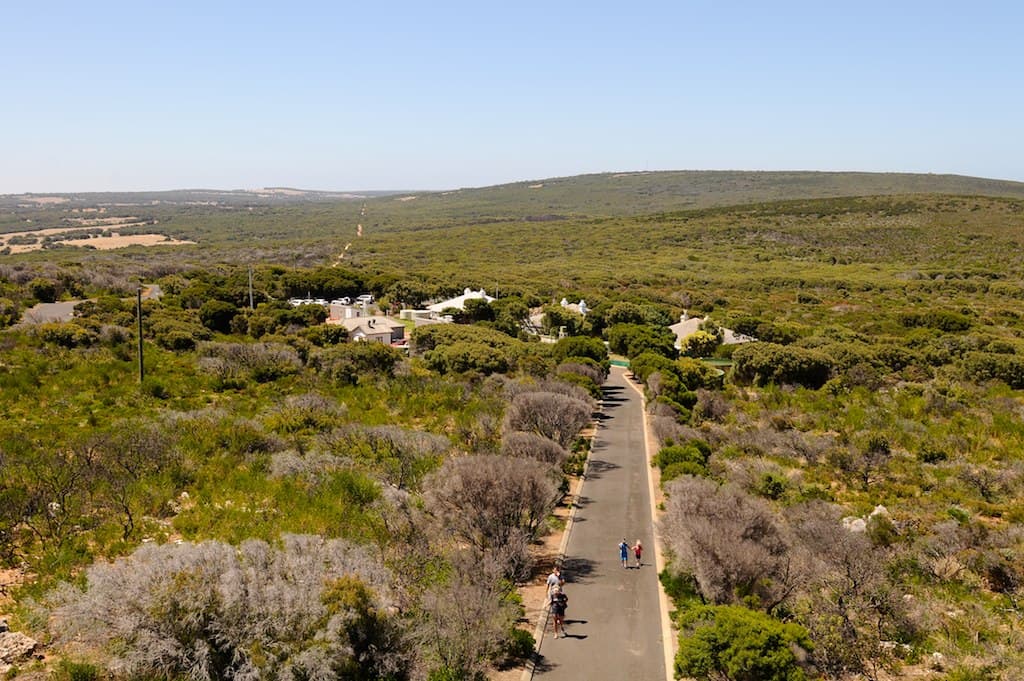
Photo: Stuart Sevastos, CC BY 2.0 · via Wikimedia Commons
The tour
The lighthouse itself is run by the Cape and Capes Foundation, and the guided tour is worth doing. It's not long (twenty minutes or so) and it takes you up into the lamp room. The light still operates, though it's automated now. The guides know the history and they're generous with it: the keeper families, the shipwrecks, the way the lens was shipped out from France in 1903 and then hauled up the headland by horse.
You can find current tour times and ticket prices on the Cape Naturaliste Lighthouse guided tours page. They've kept it sensible (last time I checked it was still under twenty dollars for adults) and it includes access to the heritage cottages and the museum.
The stone for the lighthouse came from Donnybrook. The lamp itself was the kind of engineering people don't bother to do anymore: hand-cut crystal lenses, a clockwork mechanism the keeper had to wind every few hours. I look at that mechanism and I see what I see when I look at a well-joined dovetail. Somebody decided this had to last.
The view
Climb up to the top of the headland, even if you don't do the tour, and look out.
You can see the curve of Geographe Bay. Sixty kilometres of it, all the way across to Bunbury on a clear day. It runs in a long, slow arc, and the colour of the water changes as it bends. Closer in, the reef breaks white. Further out, the deeper water turns that particular blue you only get on the south coast: not Mediterranean, not tropical, something colder and more honest.
You can see the curve of Geographe Bay. Sixty kilometres of it. It's the view that explains the rest.
To the west you're looking down at the open Indian Ocean. The wind comes in off that water and meets the limestone, and the bush behind you smells like eucalyptus and salt. If you stand still for a few minutes the place starts working on you. I've watched plenty of visitors arrive busy and leave quieter.
Whale watching, September to December
Between September and December, do not leave the headland without looking out.
The humpbacks come through on their migration from the Antarctic. They follow the coast and they cut across Geographe Bay because the water's warm and shallow. From the headland you can see them. Sometimes a long way off, just a spout and a curve of back. Sometimes close enough that you can hear the breath.
October is the most reliable. The lighthouse staff usually have a board up with recent sightings and you can borrow binoculars in the cafe. Bring your own if you have them. Take a jumper. It's always five degrees cooler up there than people expect, and there's almost always a wind.
The southern right whales come too, though they tend to stay further out. A tail flicked clear of the water is a humpback playing. They do it for hours sometimes. I've stood up there with visiting friends and watched four or five of them work the bay over an afternoon. Nobody talks much when that's happening.
Sugarloaf Rock on the way back
This is the part most people miss.
When you drive back from the lighthouse, after about three minutes there's a turnoff to the left signed Sugarloaf Rock. Take it. It's a five-minute detour that costs you nothing and gives you back something a lot of the cape tour misses.
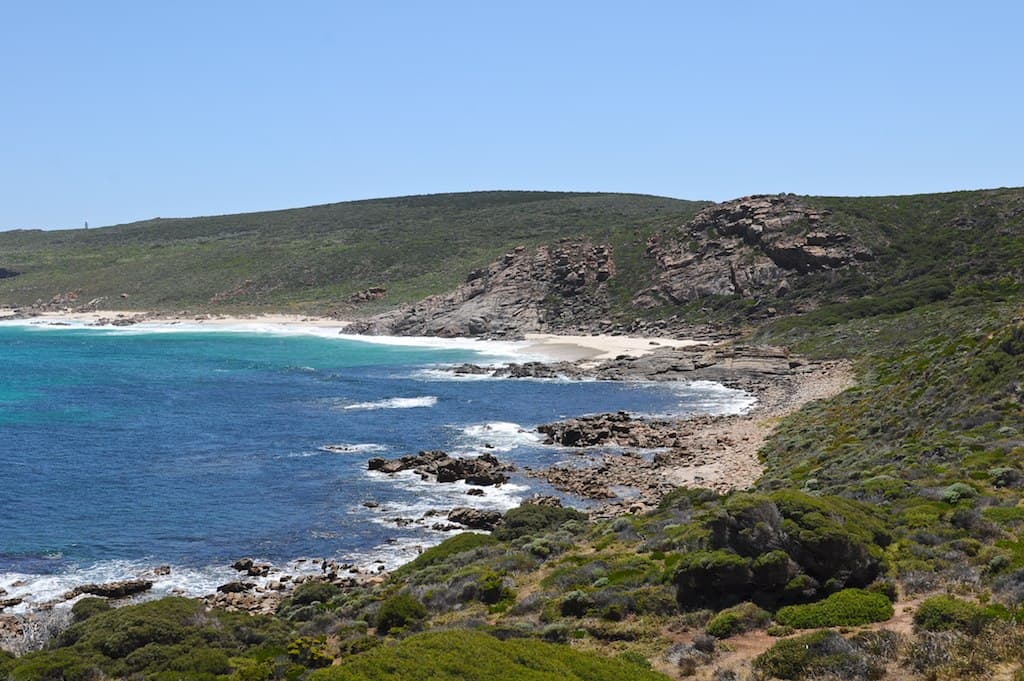
Photo: Stuart Sevastos, CC BY 2.0 · via Wikimedia Commons
Sugarloaf is a great granite tower sitting just off the coast, with white water breaking around it. There's a small carpark, a short walk, and a viewing platform. The light hits it differently every time. Mornings it's cool and grey, afternoons it goes gold, sunset it's something else again. In September and October you'll often see ospreys nesting on top of it. I've been coming here since 1982 and it still stops me.
the Sugarloaf Rock sunset notes
A little further south on the same road you'll pick up the Cape to Cape Track. It runs all the way from Cape Naturaliste down to Cape Leeuwin (135 kilometres of coastline) and the section here is some of the best. You don't have to walk the whole thing. Walk twenty minutes south of Sugarloaf and you'll find yourself in country that hasn't changed since I first saw it.
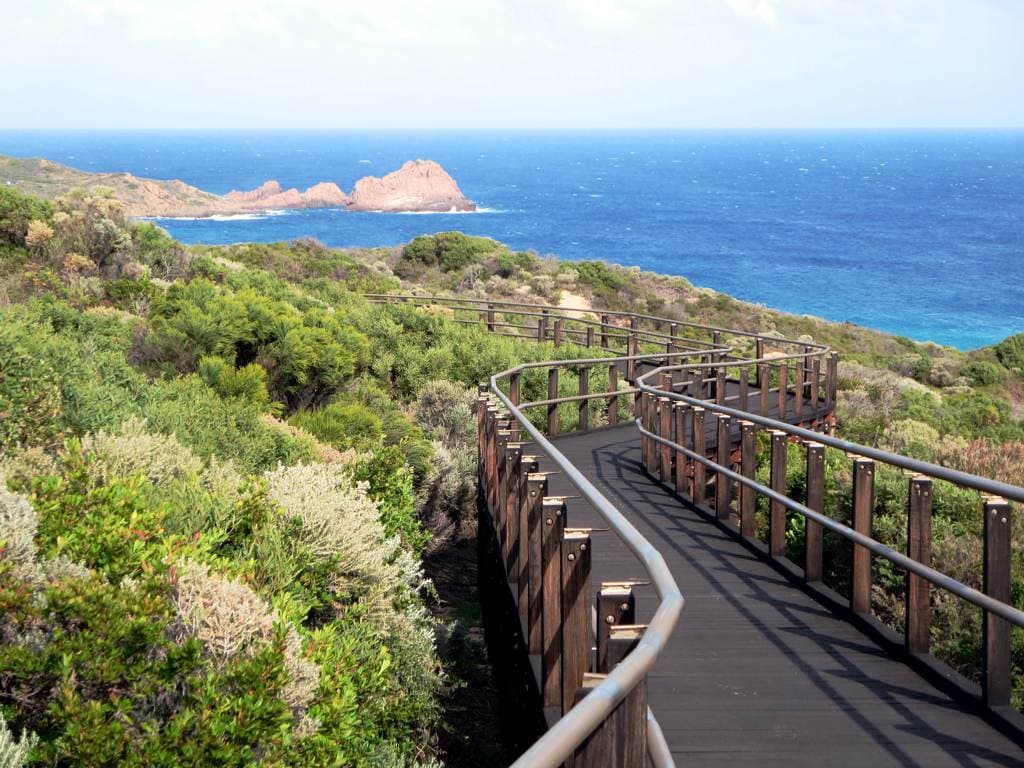
Photo: David Stanley, CC BY 2.0 · via Wikimedia Commons
the beaches ranked, with reasons
A few practical notes
The headland is open to the public year-round. The lighthouse tour itself runs daily but with shorter hours in winter, so if you're coming through in July or August check before you drive out. The walking trails are always open.
Got time for one detour on the way back? Pick Sugarloaf. Two? Take the turnoff to Bunker Bay and walk the beach. The water there is calm and the sand is white and you'll understand why I never moved.
The lighthouse and the question of what lasts
I've thought a lot about why I bring people there.
Part of it is the view, obviously. Part of it is the whales when they're running. But I think the real reason is that the lighthouse and the country around it answer a question without making a fuss about it. The question is: what holds up?
That lighthouse has been sitting on that headland since 1903. It was built by people working with stone and hand tools, in weather that doesn't care about you, and it's still doing exactly what it was made to do. The granite under Sugarloaf has been there since before any of this had a name. The whales have been swimming through this bay every spring for longer than anyone can measure.
You don't have to be a craftsman to feel it. You just have to stand there for ten minutes.
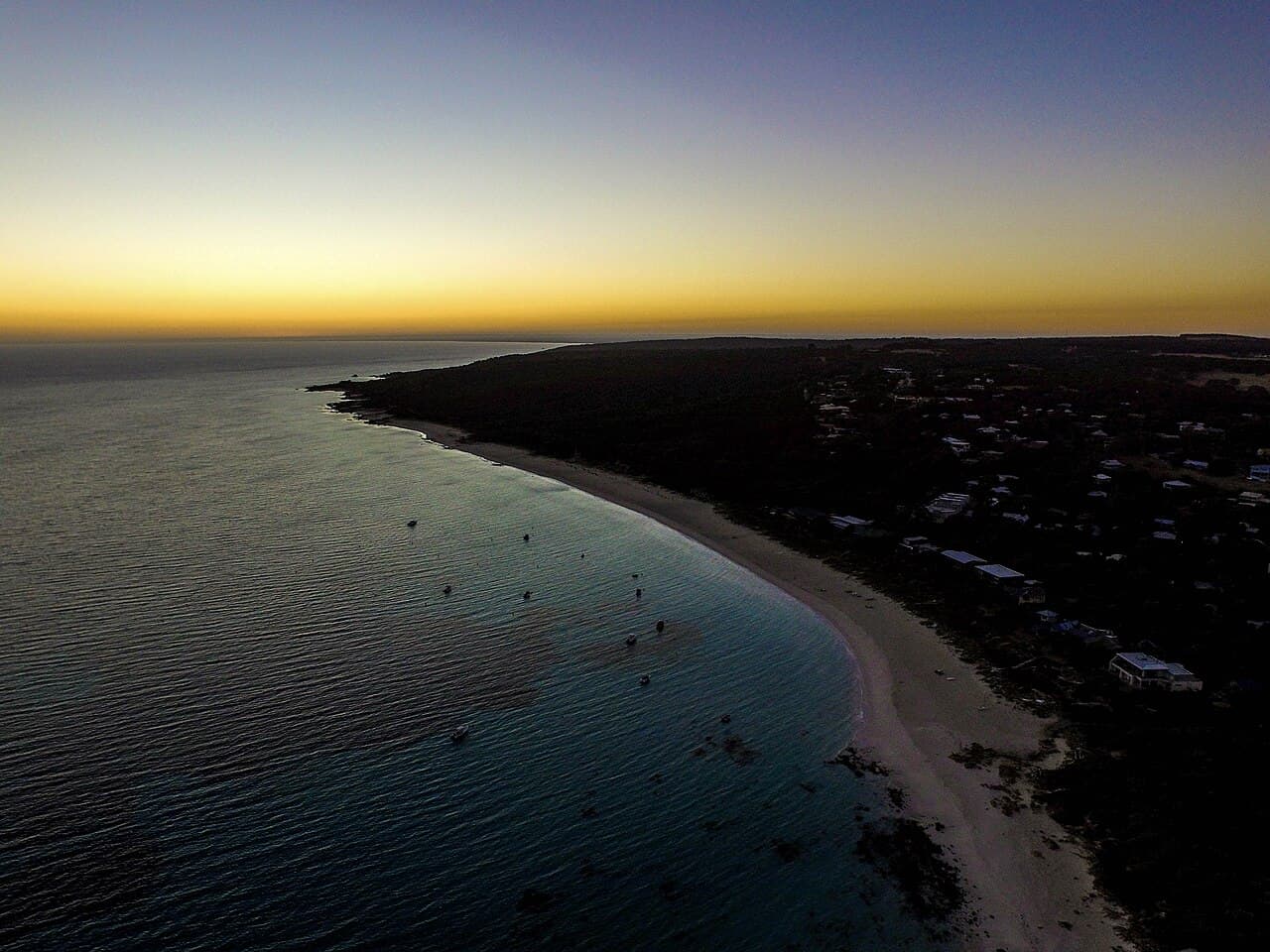
Photo: Harry Foley, CC BY-SA 4.0 · via Wikimedia Commons
whale watching from Cape Naturaliste
On the way back toward Yallingup Siding, you'll come through Blythe Rd. The gallery is there — jarrah walls, southwest limestone, the same materials as the country you've just been standing in. If the flag's flying, we're open. Come in and have a look. No pressure.
Autumn is when I go up most. The light is lower, the crowds are gone, and you can stand on the headland for half an hour without seeing another person. Take a coffee. Watch the water. The cape will still be there when you've finished.
Plan your visit to Yallingup.
Directions & hours →