[Region]
Whale Watching Season: September in the South West
September is when the humpbacks turn the corner at Cape Naturaliste on the way south — and when our gallery has the windows open for the first time since June.
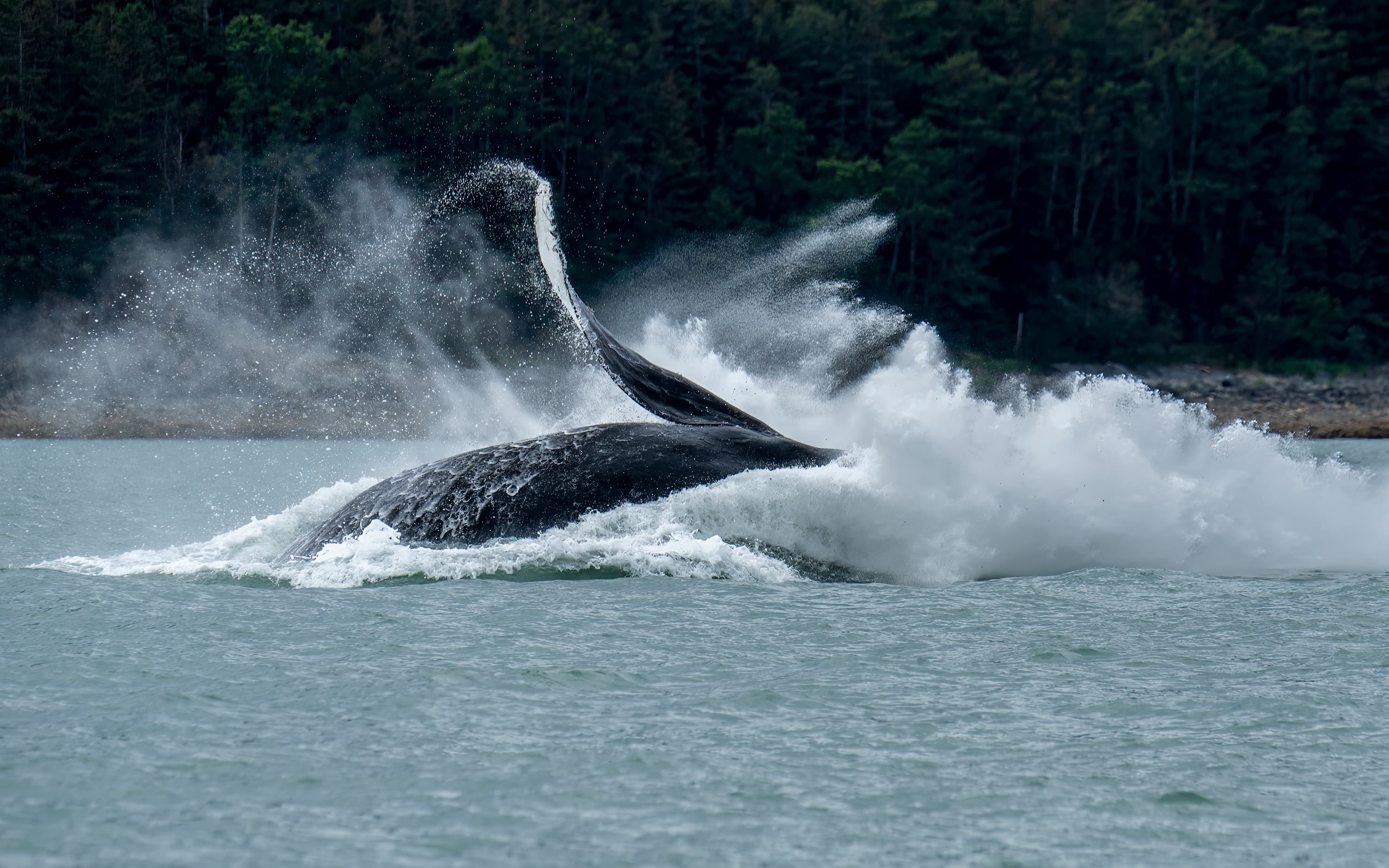
September is the month I tell people to come down for the whales. The humpbacks and southern rights are tracking past Cape Naturaliste on their way back south to Antarctic waters, the weather has turned, the wildflowers are starting, and our gallery has its windows open for the first time since the winter set in.
I'm John. I've been on Blythe Rd in Yallingup since 1982. I've watched the whales go past from the cliff above Sugarloaf Rock for forty September months in a row and the season is one of the steadier rhythms of life down here.
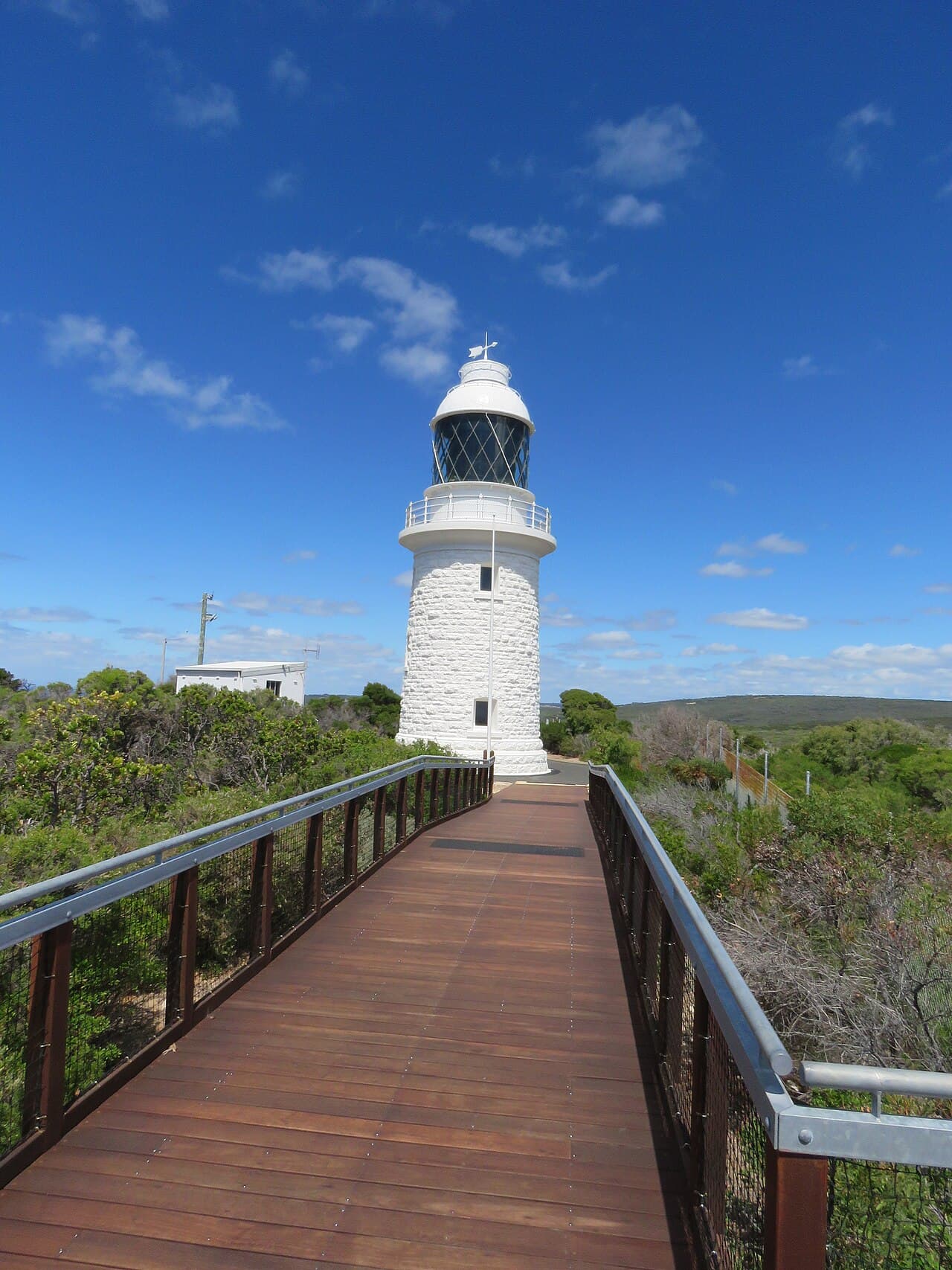
Photo: Calistemon, CC BY-SA 4.0 · via Wikimedia Commons
The season, simply
The humpback whales migrate up the WA coast from May to August on their way north to the warm water to calve. They come back down south from September to early December: slower this time, often with calves alongside, which is why the spring return is the better viewing window.
The peak window at Cape Naturaliste is mid-September through to early November. Late September is the part of the season I'd choose for one week. The animals are usually moving in pairs or pods, the calves are big enough to be visible from the cliff, and the weather is generally on its way to being kind.
Southern right whales are also around through the South West winter and into spring, generally closer to the coast than the humpbacks. You can sometimes see them right off the surf break, particularly at the south end of Geographe Bay.
Where to watch from
The single best free spot is the Cape Naturaliste Lighthouse whale platform, at the top of the cape. The headland points north-west and the migration route runs right past it. The platform itself is well-set. There's signage on what you're looking at, a pair of fixed scopes, and the view runs from Bunker Bay around to the open ocean.
A close second is Sugarloaf Rock, about ten minutes' drive south of the lighthouse and then a five-minute walk from the car park. You're lower to the water and the framing is different. The limestone stack offshore gives you a foreground. I prefer Sugarloaf if I'm doing it alone with a thermos. The platform is better with kids and binoculars.
A third option: Bunker Bay. The bay is sheltered and calm and the whales come in close at times because there's krill. The walking track around the western edge gives you a few elevated points. Bring a hat. The wind is honest.
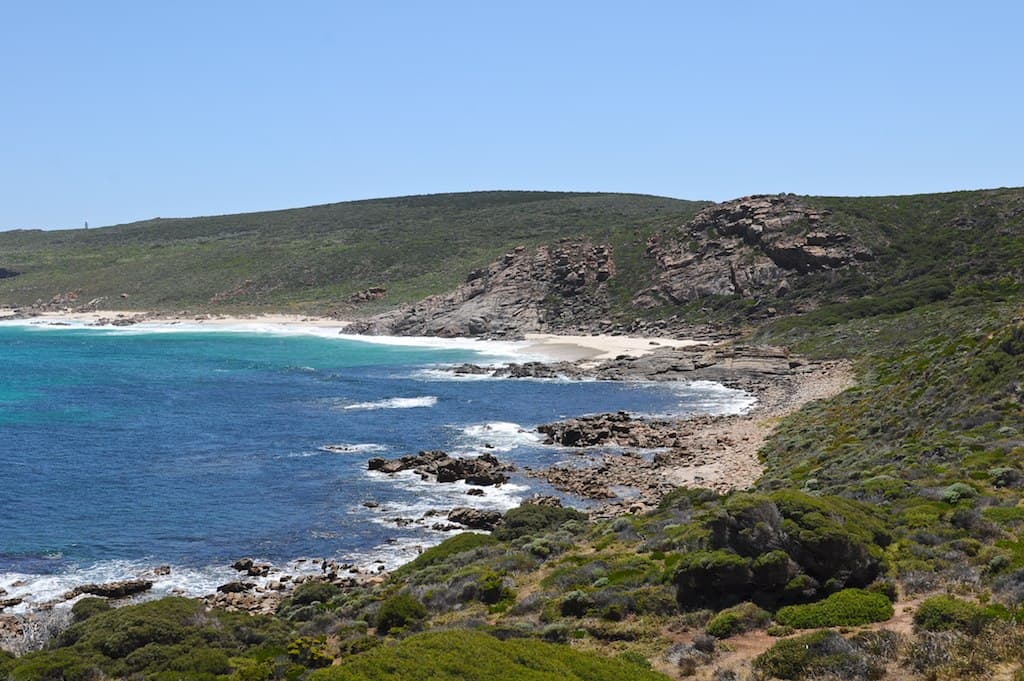
Photo: Stuart Sevastos, CC BY 2.0 · via Wikimedia Commons
What you'll actually see
I'll be honest about this. You'll see blows first: the spout of water and breath, sometimes a kilometre offshore. Then a back curving above the surface. Sometimes a tail. Occasionally, and this is the gift of the day, a breach, the whole animal coming clear of the water and crashing back.
You will not necessarily see a breach. Breaches are not on schedule. Some days you watch for two hours and see twenty blows and three tails. That's a good day. Some days you see one or two and that's the day.
Coming a long way for this, give yourself two days at the headland, not two hours. Spread it across morning and afternoon. The light is best early and late.
A whale breach is not something you watch for. It's something you happen to be looking at when the rest of the world stops.
Going out on the water
For closer than the cliff gives you, there are boats. Whale watching tours in the South West run out of Augusta and Dunsborough through the season. The Augusta operation starts earlier (May/June for the northern migration) and the Dunsborough operations work the spring return.
The boat is a different experience. You get closer, the whales come up alongside the vessel at times, and you can see scale you can't see from the cliff. The trade-off is the swell. The spring weather in the South West is not always kind to a small boat and even a calm day at the headland can be a rolling sea offshore. Bring sea-sickness tablets and don't eat a heavy breakfast.
I've done both. If I had to choose, I'd still pick the cliff. Standing on land with the wind in your face and a flask of coffee, watching for half a day, you absorb the place differently. But I won't talk anyone out of the boat. The first time is something.
A day around the whales
- 7.30am
Sugarloaf Rock
Early light. Quiet. Bring breakfast in a thermos. - 9.30am
Cape Naturaliste Lighthouse platform
More elevation. Better scopes. The tour up the lighthouse itself if you want it. - 11.30am
Coffee at Bunker Bay or the Cape Naturaliste cafe
Warm up. The wind off the headland gets in. - 12.30pm
Lunch in Dunsborough
Twenty minutes back down the road. Easy options on the main strip. - 2pm
Eagle Bay or Meelup
Different coast. Calmer water. Possible inshore whale sightings, particularly southern rights. - 4pm
Back to the cape for late afternoon
If the day has held, the late light on the platform is the best of the day. - 6pm
Drive to Yallingup for dinner
Caves House or back to your accommodation.
What to bring
Binoculars. Not optional. 8x42s if you have them. Anything bigger gets hard to hold steady in the cliff wind.
A wind jacket. September on the cape can do anything. I've watched whales in shorts and a t-shirt and I've watched them through driving sleet in the same week.
A hot drink in a thermos. The viewing is the kind of activity where you stop noticing the cold until it's already in you.
A camera with a long lens if you're into that, but be warned: most whale photos from the cliff are dots. The eye picks up motion the camera can't. Spend more time looking than focusing.
Patience. The animals are not on your schedule.
Pair the day with the gallery
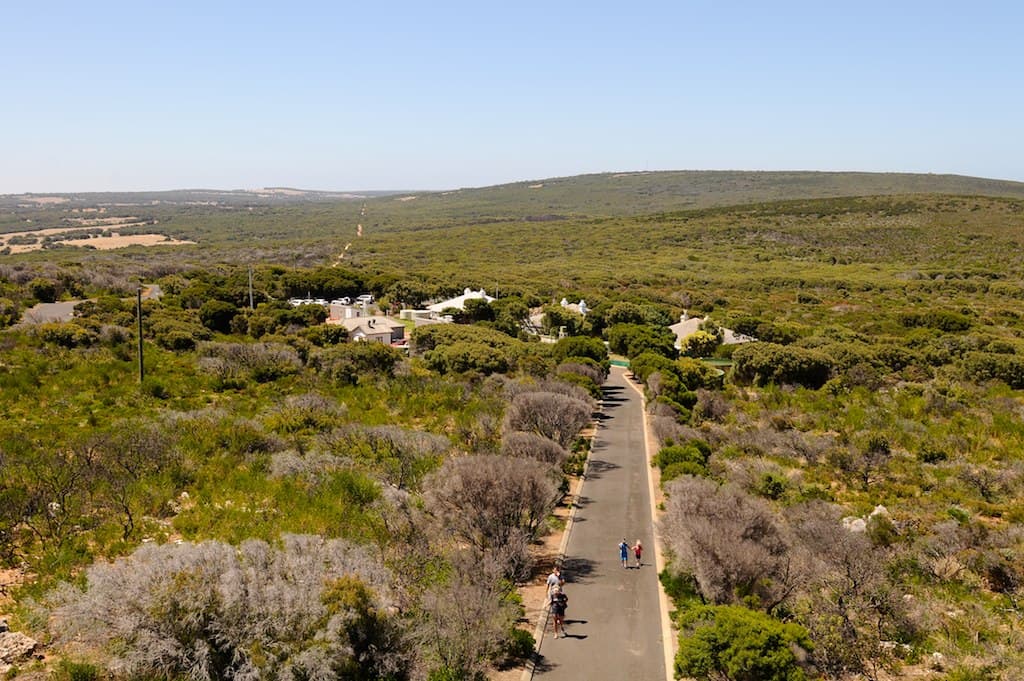
Photo: Stuart Sevastos, CC BY 2.0 · via Wikimedia Commons
Our gallery is half an hour from the lighthouse. Most days I'm in the workshop and Pam is at the front. She reads which visitors want to look quietly and which ones want to talk — I tend to stay on dimensions and get it wrong. September is one of the better months to come in. The building is warming up, the windows are open for the first time in months, and the work in progress on the bench tends to be the bigger commission pieces that have been sitting through the winter. I built the place in 1988 with jarrah and southwest limestone, all of it by hand. The walls hold the same wood I work with every day.
If you're doing a whale day and want a break from the wind, drop in. There's no pressure. People come in for ten minutes and stay an hour. That's the rhythm of it.
From Cape Naturaliste Lighthouse: back down to Dunsborough, south on Bussell Hwy, fifteen minutes to the Carbunup store, then right on Blythe Rd. Google Maps sometimes misdirects via Wildwood Rd — stay on Bussell Hwy, turn at the Carbunup store, then Blythe Rd.
The wider picture of September
September is also when the wildflowers start in earnest along the Cape to Cape Track. The combination of whales offshore and wildflowers underfoot is one of the genuine seasonal pleasures of the South West. The longer take on doing both sets out the route.
For more specifically on whale watching closer to Yallingup, the whale-watching write-up. And for the lighthouse itself (the tour, the history, the keeper's cottage) Cape Naturaliste, the longer view.
A note on the season's edges
The first whales sometimes start coming through in late August. The last stragglers can still be moving past in early December. If you can only travel at the edges of the window, you'll still see them, just fewer, and you'll need to put in more cliff time.
Mid to late September is the sweet spot. Book your accommodation a couple of months out. Dunsborough fills up first. Yallingup runs out of beds quickly too. If you can stay further south near Margaret River, you'll get more availability but a longer drive each day.
The simple thing I always say
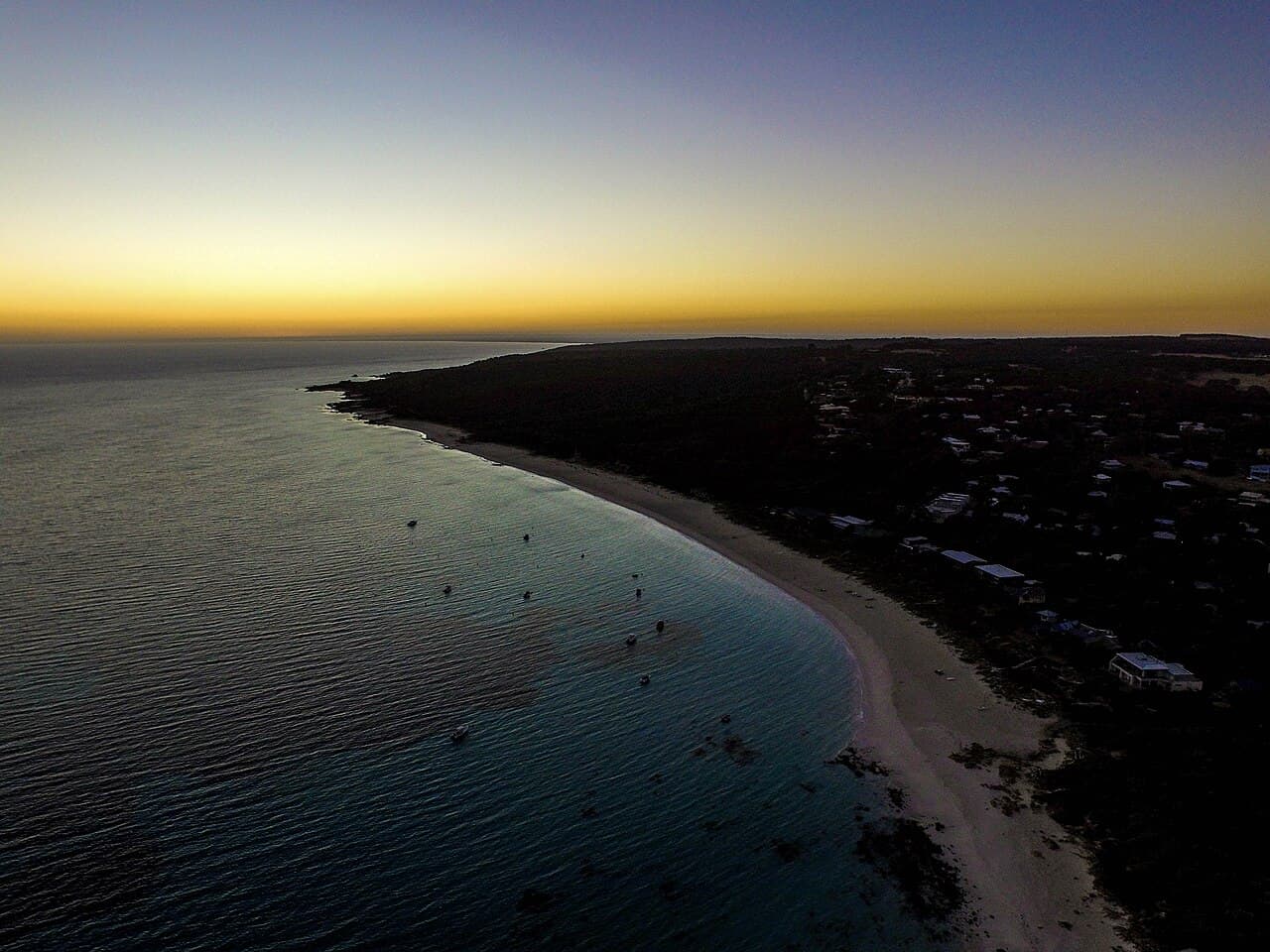
Photo: Harry Foley, CC BY-SA 4.0 · via Wikimedia Commons
Don't watch the water expecting an animal. Watch the water because it's beautiful water. The whales are the gift inside the day. If the day itself isn't worth standing in, the whales won't fix it. If the day is worth standing in (and on the cape in September, most of them are) then the whales are what happens while you're already happy.
The Cape to Cape walk is no cost, no booking, just you and 135km of coastline that makes you realise why I've never wanted to live anywhere else. The views do something to you. They always have. Add a whale to that and you've got a September morning that holds its own against any other month of the year.
September. Take a thermos. Take your time. The whales will be along.
Read next: spring in the region.


Plan your visit to Yallingup.
Directions & hours →