[Region]
Best Photography Spots Within 30 Minutes of Yallingup
A furniture maker's list of where the light does something worth photographing, within half an hour of my workshop. No tripods required, just timing.
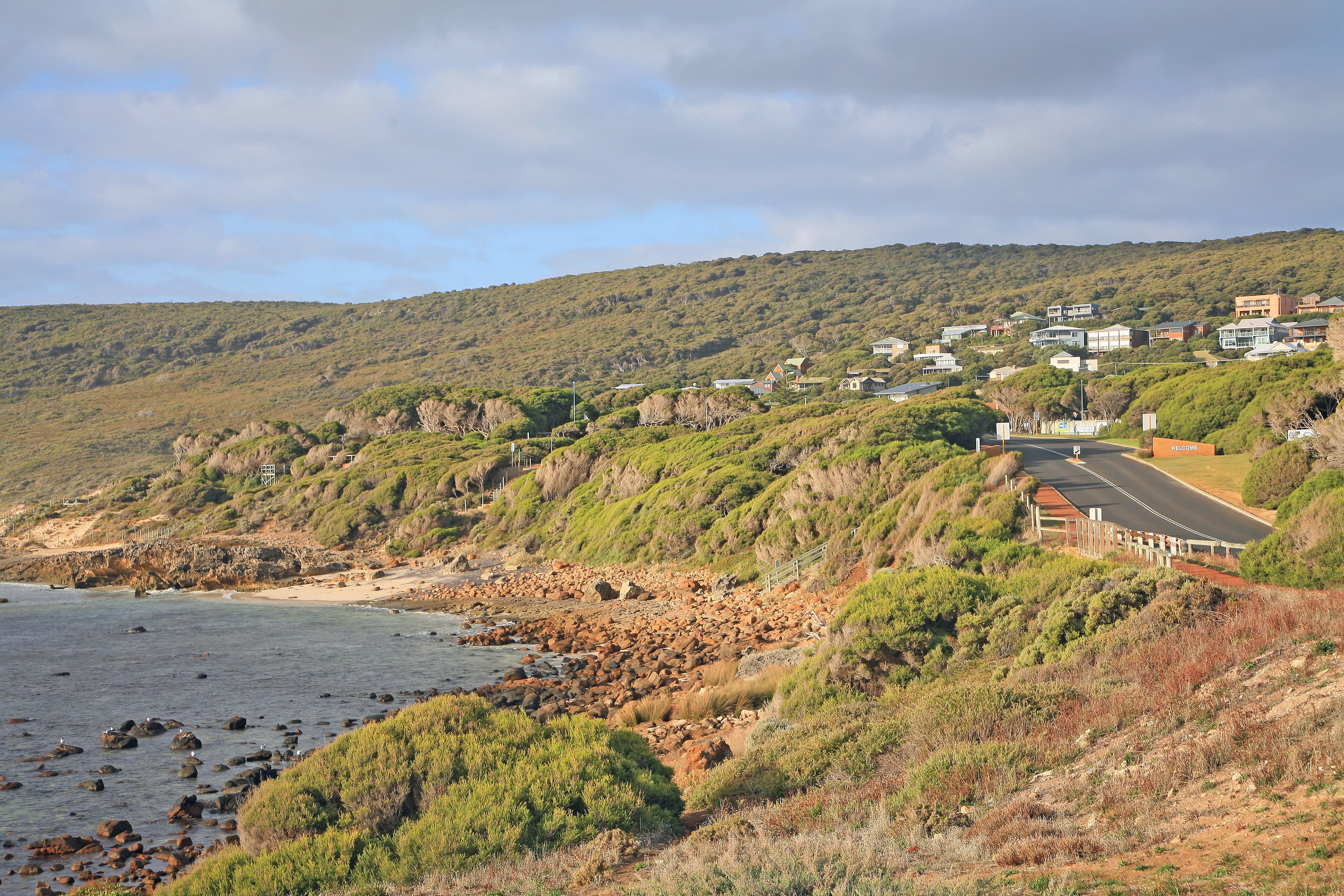
I work with form and grain for a living. Photography and furniture making aren't as different as they look. Both are about how you respond to light.
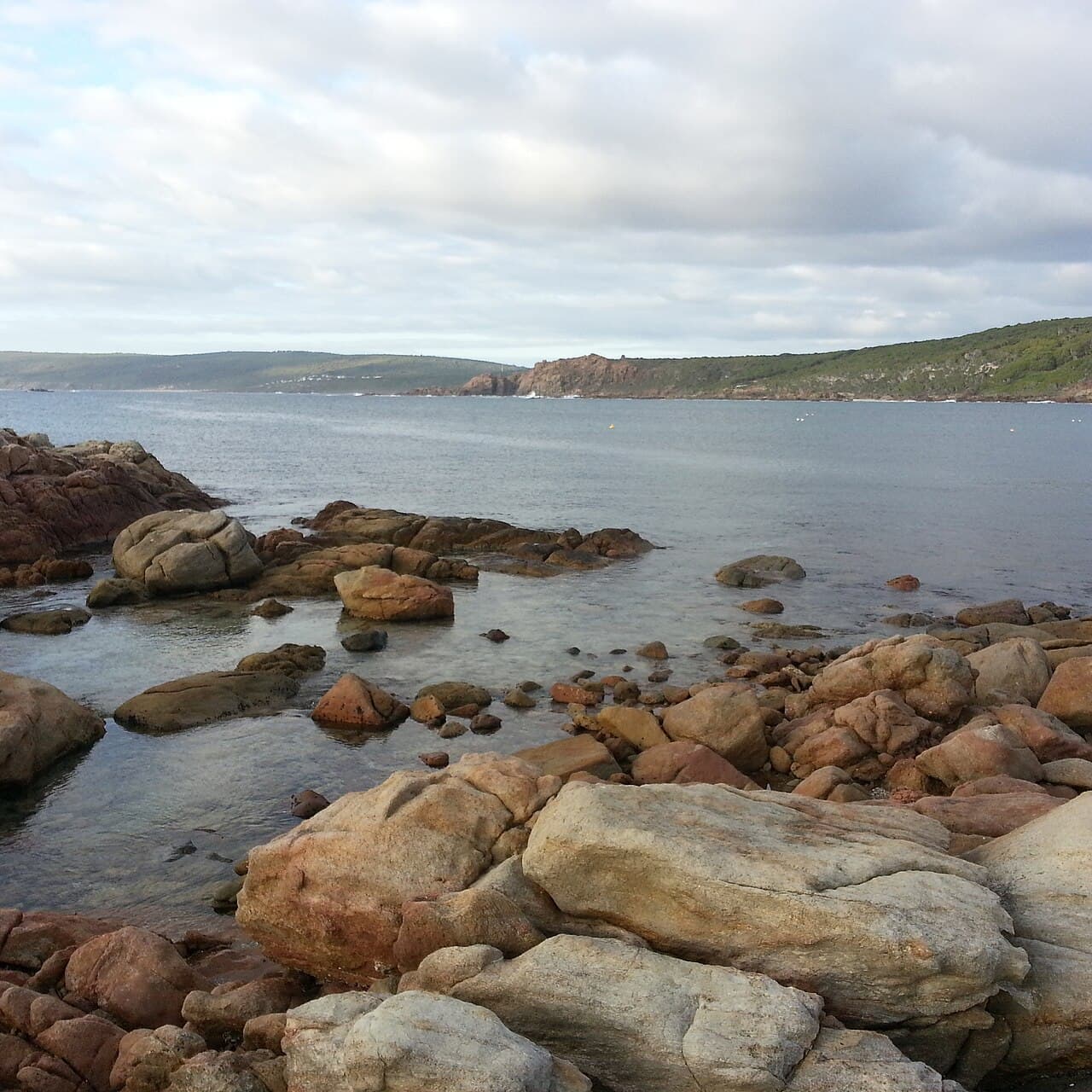
Photo: Lasthib, CC BY-SA 4.0 · via Wikimedia Commons
I am not a photographer. I have a phone and a battered old Canon that comes out maybe twice a year. But four decades of looking at jarrah for a living has trained my eye for one thing: where the light is. The same instinct works for landscape. Here is where I would go if I had a camera and half a day around Yallingup. None of these spots are secret. The trick is when you turn up.
Canal Rocks: late afternoon, low tide
Canal Rocks is the easy one. It is about twenty minutes from my workshop, the carpark is big, and there is a boardwalk that lets you get within a metre of the water. Most people photograph it from the carpark side, which is a mistake. Walk over the bridge, cut left along the rocks, and shoot back towards the channel with the sun behind you. Late afternoon, the granite goes orange. Low tide opens up tide pools that catch sky.
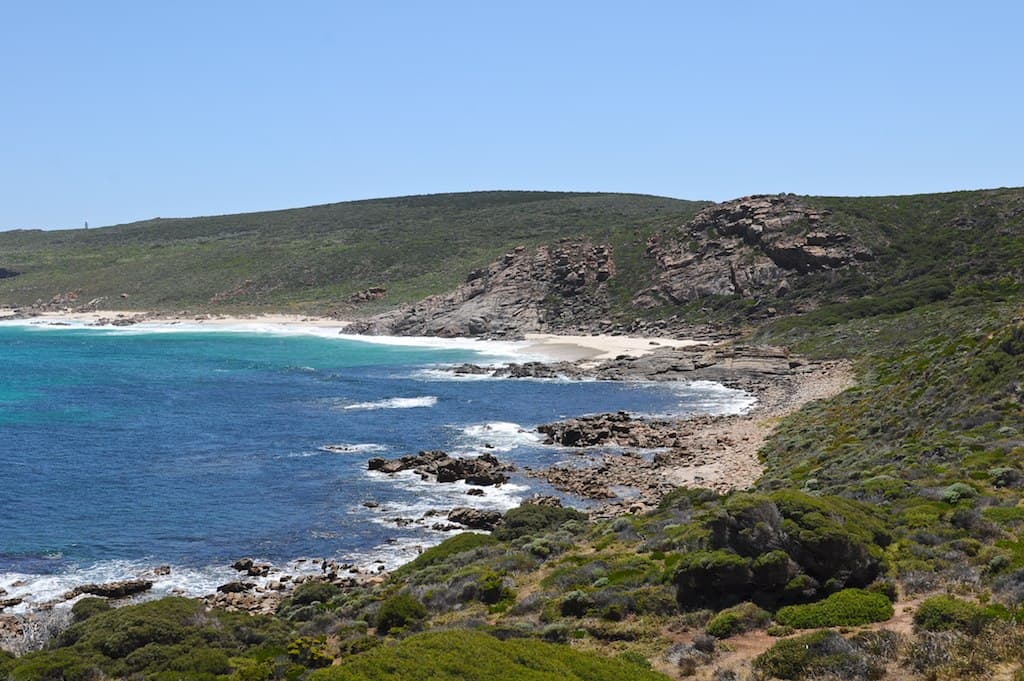
Photo: Stuart Sevastos, CC BY 2.0 · via Wikimedia Commons
If there is a swell, even better. Waves break across the channel and you get spray that catches the light. Wear shoes you do not mind getting wet. Bring something to wipe the lens. how to do Canal Rocks for the light
Sugarloaf Rock: bigger the swell, better the picture
Twenty minutes north of Yallingup is Sugarloaf, which I think is the most photographed bit of coast between here and Albany. It is a basalt island stack sitting just offshore, and on a big swell day the waves explode against it.
The standard shot is from the carpark lookout. Fine, but everyone has that one. Walk a few hundred metres south along the Cape to Cape track and you get angles where Sugarloaf sits against open ocean instead of the headland. Sunrise is better than sunset here. The light comes over your shoulder and lights up the rock face. Sunset puts the rock in silhouette, which can work, but you lose detail.
Check the swell forecast before you go. A two-metre swell makes Sugarloaf. A flat day, it is just a rock. Sugarloaf at golden hour
Cape Naturaliste lookouts: clear day, mid-afternoon
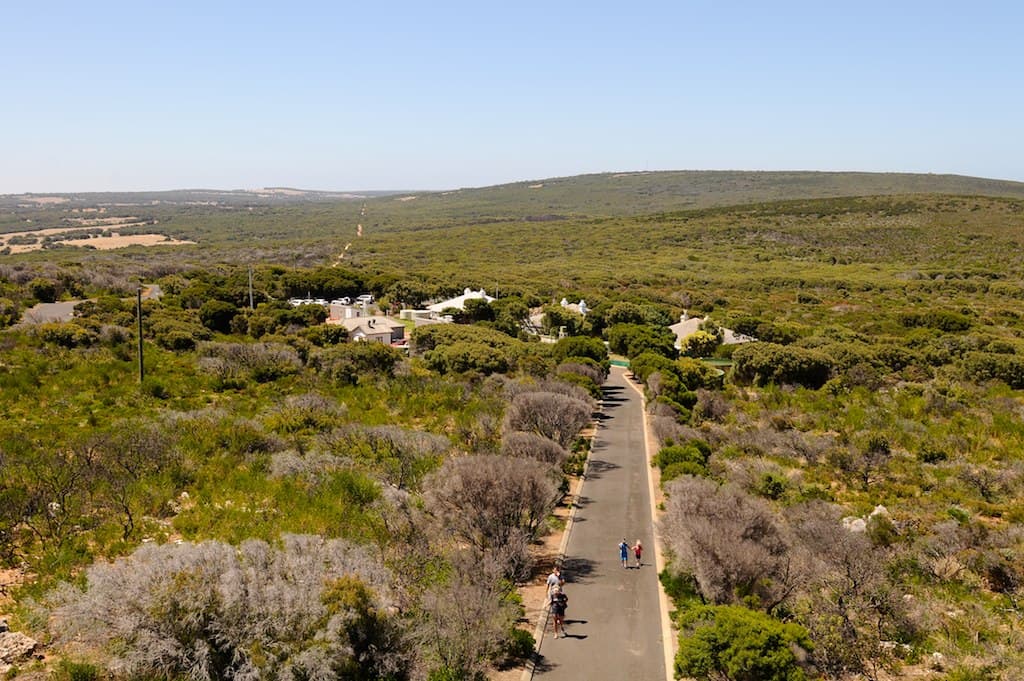
Photo: Stuart Sevastos, CC BY 2.0 · via Wikimedia Commons
Drive to the end of the cape, park at the lighthouse, and walk the loop. There are three lookouts. The best one for photographs is the southern one. The curve of the coast runs all the way back to Sugarloaf and you can see the limestone cliffs in profile.
Mid-afternoon on a clear day is when you get colour in the water and shadow in the cliffs. Early morning is too soft. Sunset puts everything against the sun and you will get silhouettes, not detail. the Cape Naturaliste lighthouse guide
If you walk the cape track for an extra fifteen minutes east towards Bunker Bay, there is a viewpoint that looks back at the lighthouse from the south. Almost nobody goes that way.
Yallingup Beach: first light, half tide
The reef offshore at Yallingup makes a line of white water in any swell, and at first light it photographs beautifully. Park at the main beach carpark, walk south along the sand, and get below the dunes so the reef is breaking in your frame.
Pick a half-tide. Full high tide eats the foreground. Dead low tide leaves you with too much wet sand and not enough water. Half tide gives you the strip of sand, the reef, the white water, and the headland in one frame.
This is also the only spot on the list where I would actually recommend a tripod. Pre-sunrise, the colour comes up slowly and you want long exposures to smooth out the water.
Smiths Beach: sunrise from the southern headland
Most people photograph Smiths from the main carpark lookout, which is fine but flat. Better is to walk south along the sand to the rocks at the southern end and turn back. You get the whole curve of the beach with the limestone headlands either side. First light works because the sun comes in side-on and lights the cliffs.
Smiths is busy in summer. Get there before six in January and you will share the beach with maybe one dog walker. By eight, full. my deeper take on Smiths
Injidup natural spa: calm day, mid-tide
Injidup is harder to get to than most of these spots. The track in is rough and you have to scramble down rocks to reach the spa. But the colour of the water on a still day is the deepest green-blue you will see in the southwest. Photograph from above first, then climb down for the close shots.
Pick a calm day. Big swell makes the spa dangerous and the spray makes the lens unusable. Mid-tide is your window. Full high is too rough, full low drains the pool.
Busselton Jetty: sunrise, end to end
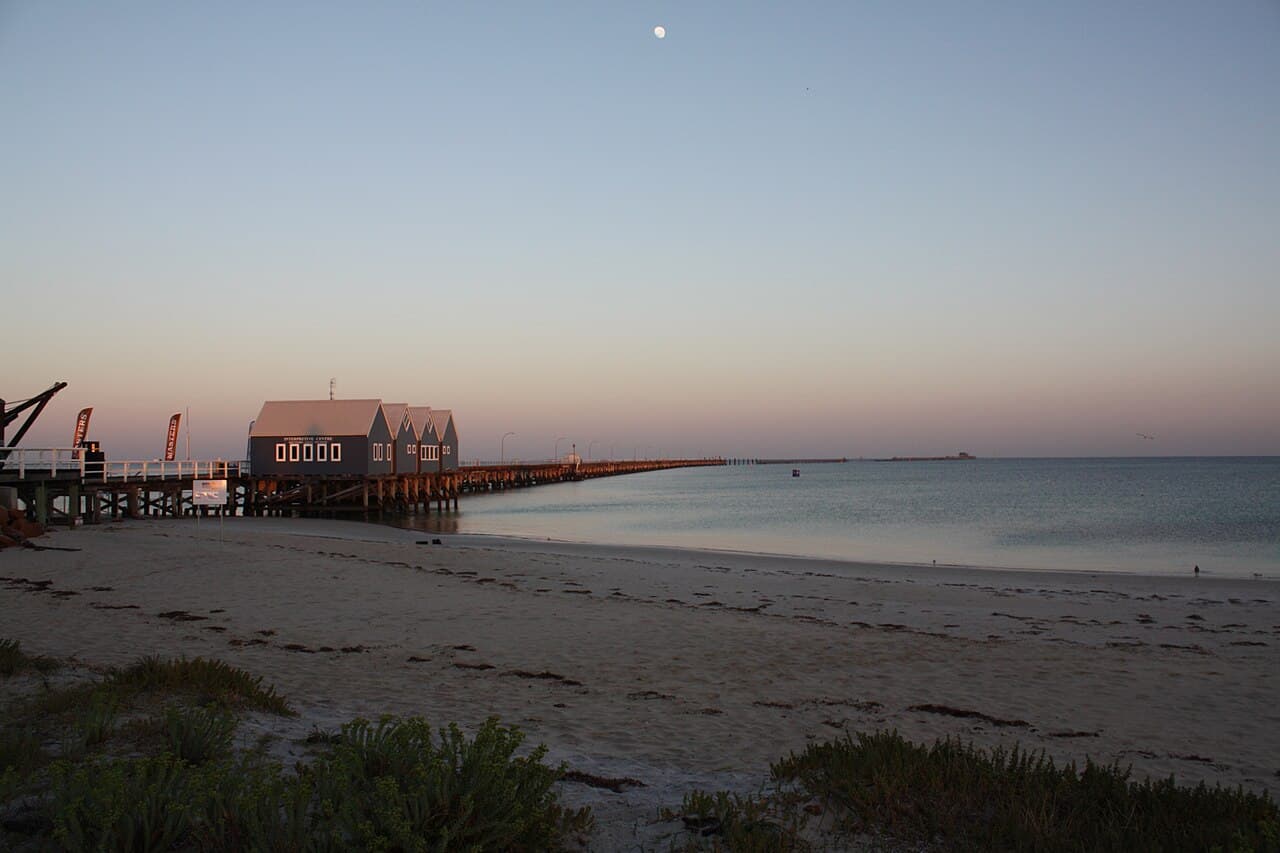
Photo: Michelle Corcoran, CC BY-SA 4.0 · via Wikimedia Commons
The Jetty is the longest timber-piled jetty in the southern hemisphere, nearly two kilometres of leading line out into Geographe Bay. Sunrise is the time. The sun comes up over the jetty when you shoot from the foreshore looking east. There is no charge to walk on the first few hundred metres, which is enough for any photograph you want.
Best with morning mist on the water, which you get in autumn and early winter. Calm conditions, no wind.
Meelup Beach: late afternoon, low light
Meelup faces north, which means it is one of the only beaches in the region where the sun does interesting things at the end of the day rather than just disappearing behind you. The eastern end with the rock pools is the spot. Late afternoon, the granite glows.
And the gallery itself
I should not put this on a public list, but I will. Late afternoon, the front of the gallery on Blythe Rd catches sun through the west-facing entry, and it hits the jarrah walls in a way that nothing else does in the building. I built the place in 1988 from solid jarrah and southwest limestone, the same materials I work with every day. The afternoon light through it is part of why I did it that way.
If you are a photographer, come between two and four in the afternoon. The light through the jarrah walls does something the rest of the day does not. Pamela does not mind a camera in the gallery. Google Maps sometimes misdirects via Wildwood Rd. Stay on Bussell Hwy, turn at the Carbunup store, then Blythe Rd.
Conditions to chase
A few notes on timing that took me a long time to work out:
- Autumn is the best light. Lower sun angle, less haze, mornings often have mist. April to early June.
- Clear winter days give you the cleanest air and the sharpest distances. The lighthouses photograph best in winter.
- Summer is the worst for landscape photography in the southwest. The light is hard, the haze is up, and the wind comes in by mid-morning. Sunrise or nothing.
- Look at the wind forecast before the weather forecast. A windy clear day is harder to shoot than a calm overcast one.
Autumn is the best light. Lower sun angle, less haze, mornings often have mist.
What I would carry
I am not the right person to give camera advice. But the people who turn up at the gallery and show me their best southwest photographs all seem to use a wide lens for the coast (16 to 35mm) and a midrange zoom for everything else. The serious ones carry a tripod and a circular polariser. The polariser is the one accessory I notice in the photographs that look properly finished. It cuts the glare off the water and pulls out the colour in the granite.
If you only have a phone, just turn up early or late. The light does the work. the sunset spots in Yallingup
That is what I would chase if I had a camera and a clear week. Some of these spots will reward you the first time. Others, like Sugarloaf and Injidup, you might need to come back three times before you get the day you wanted.
The light is the same light that ends up in the timber I work with. Looking at it the way a photographer does is just another way of paying attention.

Plan your visit to Yallingup.
Directions & hours →