[Workshop]
Australian Made Furniture: How to Tell What's Genuine
'Made in Australia' has a legal test, but it still allows imported timber and parts. How to spot genuine local hardwood furniture and what to ask a seller.
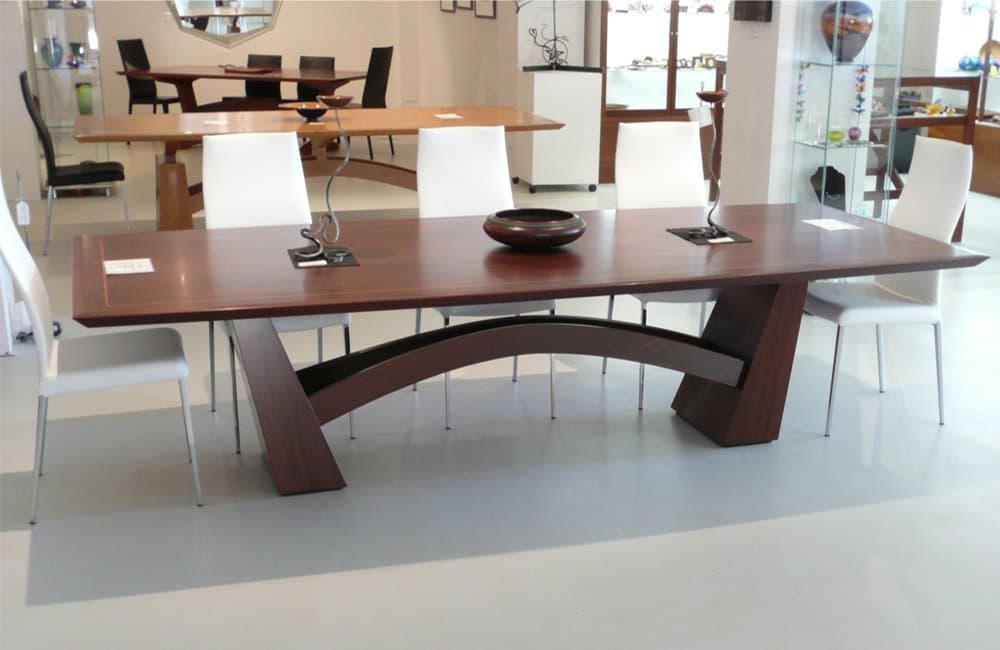
Furniture can be sold as "Made in Australia" when the last substantial step in making it happened here and that step fundamentally changed the imported parts. That test does not say where the timber grew. To know a piece is local hardwood, ask where the timber came from, who built it, and whether the top is solid or veneer.
I've made furniture from Western Australian hardwoods in Yallingup since 1982. People often arrive at the gallery after a search for Australian made furniture, and the first thing many of them ask is whether the label means what they hoped. Sometimes it does. Often it covers less than people assume. This is how I would check, from the legal definitions down to the underside of the table.
What does "Australian made" mean?
The Australian Consumer Law gives sellers "safe harbour" definitions for country-of-origin claims. The ACCC, which enforces the law, summarises them like this:
Two points follow. "Product of Australia" is the much stronger claim, because it asks about the materials as well as the work. "Made in Australia" can be true of a piece assembled here from imported parts, provided the work here really changed them into something new.
Meeting a definition is a safe harbour, not the only way to make a lawful claim. A claim can still be lawful if an ordinary consumer would not be misled.
What is the Australian Made logo?
The green-and-gold kangaroo logo is separate from the legal wording. It is a registered certification trade mark, administered by Australian Made Campaign Limited, a not-for-profit funded by its licensees. For non-food goods like furniture, a business needs a licence to use it, and the licensor assesses each product against its Code of Practice. Using the logo is voluntary.
The logo's test for "Australian Made" is substantial transformation in Australia. There is no minimum percentage of Australian components. You may still see old websites describing a test that at least 50 per cent of production cost had to be incurred here. That requirement was removed from the law and from the logo's rules in 2017, so do not rely on it.
The logo is a useful signal that someone has had the claim checked. It still doesn't tell you the species, where the timber grew or how the piece is built.
"Designed in Australia" is not "made in Australia"
"Designed in Australia" says where the drawing was done. The ACCC's country-of-origin page sets out tests for "made", "produced" and "grown" claims, and does not give a test for "designed". Read it as a statement about the designer, then ask where the piece was built.
The same goes for "Australian owned", "Australian company" and a flag on the website. They describe the seller. They say nothing about where the table was made. Whatever words are used, the overall impression must not mislead, so ask plainly where it was made.
Imported timber, local timber and Australian hardwood
"Australian hardwood" is a wide label. It covers dozens of eucalypt species grown across the country, and a lot of timber sold under that heading is not from Western Australia. Of the species I work with, jarrah grows in the South West of Western Australia and nowhere else. Blackbutt is a good example of the other direction: most blackbutt on the market comes from New South Wales and Queensland. If WA-grown matters to you, ask.
A few things to ask about the timber:
- Which species, and where did it grow? A maker should name the species and the region. If the answer is vague, the timber is vague.
- How was it sourced? Commercial logging of Western Australia's native state forests ended in 2024. New jarrah and marri now comes mostly from salvage, approved clearing, forest thinning and private land, and recycled timber matters more than ever. A maker should be able to tell you which.
- Is it recycled? Old beams and wharf timbers can be the best of it. With tuart, ask what building the timber came out of. A good maker will know. My guide to the five WA hardwoods covers each species, and the jarrah guide goes deeper on that one.
A table can be legitimately made in Australia from imported timber. It can also be Australian hardwood and made overseas. The label and the timber are two different questions, so ask both.
Solid timber or veneer?
Veneer is a thin layer of real timber over MDF or particleboard. It is a different product from solid wood, and it can be perfectly honest if it is described as veneer. The problem is when it is not.
- Look underneath. Veneers and stains hide on top, not below. Turn the piece over or crouch down and look at the underside of the top and the inside of the drawers.
- Lift a corner. If it is lighter than it should be, ask why. Jarrah weighs around 800 to 900 kilograms a cubic metre when seasoned. A long jarrah table is a job for several people.
- Watch for a doctored top. A so-called marri top with no gum vein or fleck anywhere has probably been bleached, or it isn't marri.
Joinery and finish: what to look at
Once you know the timber is solid, look at how it is put together.
- Joinery, not just screws. Hand-cut dovetails vary slightly across the joint. Perfectly identical pins are a machine's signature, which is fine, but it tells you how the piece was made.
- How the top is fixed. Solid timber moves with the seasons. A solid top can shift 8 to 12mm per metre of width between a dry summer and a wet winter. A top screwed down hard can crack. I fix tops to the base on sliding battens so they can move.
- A finish you can see through. Tilt the piece into the light. A thick polyurethane looks like plastic because it is. I use a hand-rubbed oil, so the timber can move and the surface can be repaired. Lacquer is tougher at first but harder to fix when it fails. The care routine for an oiled piece is in how to care for jarrah and marri furniture.
- A maker's mark. Every table I make carries a gum leaf, cut by hand and inlaid flush on the underside. Ask any maker how they sign their work.
Plenty of furniture sold as handmade is assembled here from imported parts. If you can't get a person, you can't get a piece.
Questions to ask a furniture seller
A seller who is proud of the answers will be happy to give them. Someone selling imported furniture under a local label will struggle by the second question.
Why genuinely local hardwood furniture costs more
It costs more because more of the cost is real. These are the main reasons, from my own bench:
- The timber takes years. Jarrah air-dries for about a year per inch of thickness, then a low-temperature kiln brings it down to 10 to 12 per cent moisture, and the boards sit in the workshop for at least a month after that. A green marri board needs eighteen months to two years before I will use it for fine furniture.
- It is hard on tools, and that shows up in the price.
- Supply is limited. Good old-growth jarrah is finite and the best boards are recycled. Because the supply is limited, real jarrah costs more than imported lookalikes.
- There is waste. A marri log gives fewer long, clear boards than a jarrah one, and long clean lengths cost more.
- The work is slow. A dining table takes three to six months from the day the drawing is agreed.
For scale, the Marri Arch Dining Table starts from A$14,500. Price alone is not proof of quality, so use the questions above. But a very low price on "solid Australian hardwood" is a reason to look underneath.
Where to find Australian furniture makers
The surest check is to meet the maker. Visit the workshop, handle the timber and look at the joints. If you want a piece made for your room, a commission starts with a conversation about how you use it. You can also browse our furniture and the dining tables, all built at the bench in Yallingup and shipped to every continent.
If you would like to see solid WA hardwood furniture being made, the workshop at the gallery on Blythe Rd, Yallingup Siding, has a viewing window onto the bench. It is free to come in and the gallery is open every day from 10am to 4pm. Handle a few boards in the gallery light, which tells you more than a photograph.
Questions people ask
What does "Australian made" mean for furniture?
Under the Australian Consumer Law, "Made in Australia" means the last substantial step of making the product happened here and fundamentally changed the imported inputs. Most of the components can still come from overseas. "Product of Australia" is stricter and asks for main components and almost all the processing to be Australian.
Is "designed in Australia" the same as "made in Australia"?
No. "Designed in Australia" only tells you where the design was done. The ACCC sets out tests for "made", "produced" and "grown" claims but does not give one for "designed". Ask where the piece was built.
Is Australian hardwood furniture always made from Australian timber?
No. Australian-made furniture can use imported timber, and Australian hardwood can be used in furniture made elsewhere. Ask for the species and where it grew. Jarrah grows only in the South West of Western Australia.
How do you tell solid timber from veneer?
Look underneath, because veneers hide on top. Lift a corner to check the weight. A maker will tell you straight away what is under it.
Why is handmade Australian furniture so expensive?
The timber takes years to dry, it is hard on tools, good boards are scarce and the joinery is slow. Cheaper furniture saves money in at least one of those places, which is fine as long as you are told which.
Plan your visit to Yallingup.
Directions & hours →